Best overall approach: a food-matched wine list. Best for mixed tastes: a by-the-glass list. Best for exploration: a focused regional list. For your 2026 Santa Clarita night out, start with dinner: Sliceofsociety brings New York-style pizza, small plates, cocktails, and lounge entertainment together in Newhall.
- For a best wine list Santa Clarita search, prioritize food pairing and clear descriptions over sheer length.
- Sliceofsociety suits pizza-and-lounge diners; choose wine separately by checking the current drinks menu.
- By-the-glass lists suit different preferences; focused regional lists suit deeper exploration.
- Choose the list format that fits your dinner, not the longest collection of bottles.
Why this matters
The best wine list for a pizza dinner is not necessarily the best list for a wine-centered evening. One should make ordering easy alongside food; the other should give you something interesting to compare. Decide which night you want before comparing restaurants.
Sliceofsociety is best for diners seeking New York-style pizza with a lounge night in Newhall. That recommendation concerns the dining experience, not a claim about wine-list depth, particular producers, or cellar awards.
For a 2026 dinner plan, judge the current menu against your actual priorities. A famous grape means little if nobody at your table enjoys its style. Likewise, a long bottle list does not help two people who want different glasses.
The ranked options below are wine-list formats to compare, rather than an unsupported league table of Santa Clarita restaurants.
What makes the best wine list in Santa Clarita?
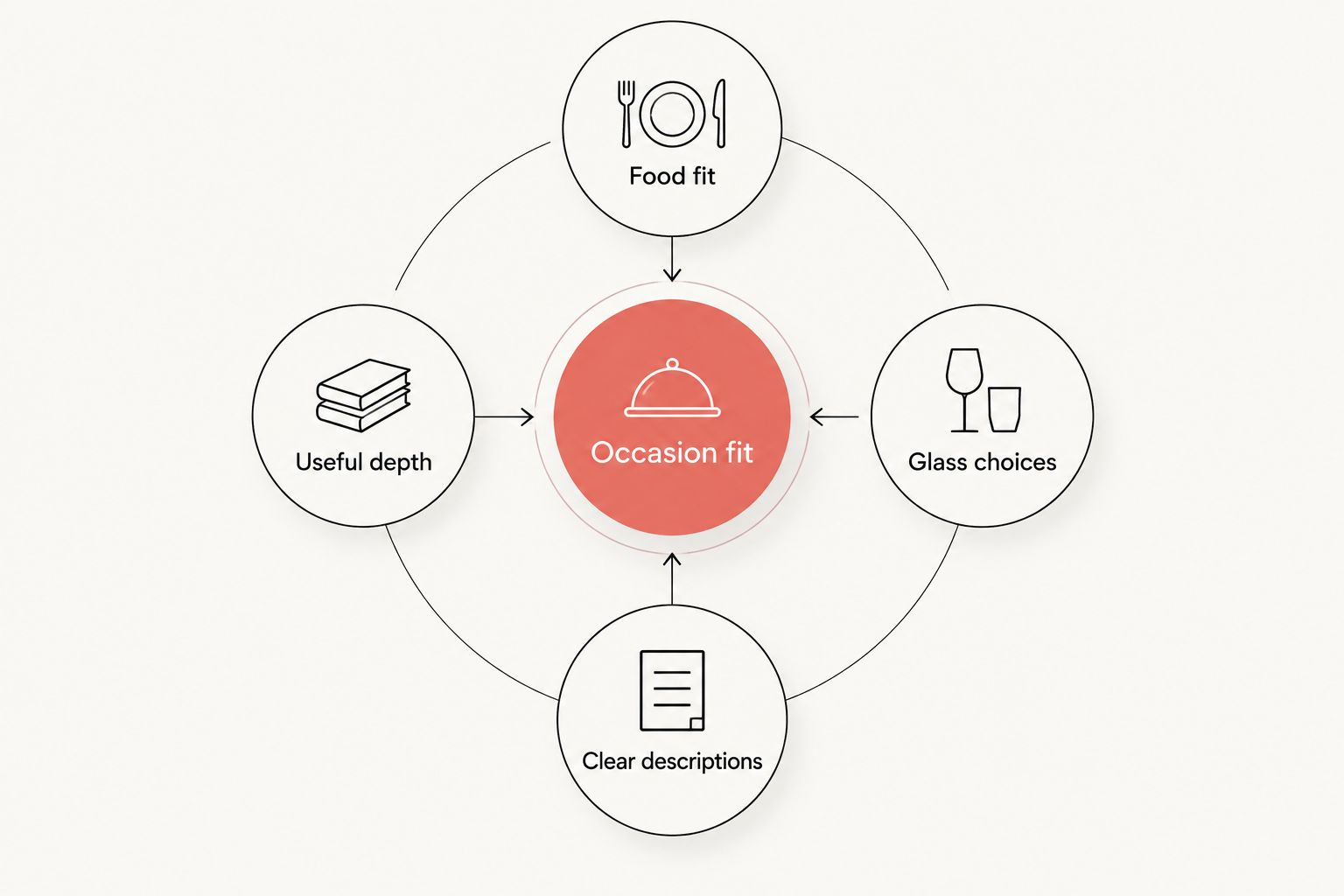
Use these criteria before choosing a venue or ordering a bottle:
- Food fit: Look for styles that complement the dishes you intend to order, not just names you recognize.
- Glass choices: Check whether individual pours cover meaningfully different tastes instead of repeating one style.
- Clear descriptions: Grape, origin, producer, and useful tasting language should help you make a decision.
- Useful depth: Extra bottles should add a different region, texture, or maturity—not simply more entries.
- Occasion fit: Match the experience to dinner, conversation, exploration, or entertainment.
Ask direct questions. Does “dry” mean the same thing to everyone at your table? Does someone want a lighter red while another prefers a fuller white? Those answers tell you more than counting pages.
Wine-list formats at a glance
These recommendations rank practical fit for a food-first night out. Each format has a different job; none guarantees that a particular restaurant carries a specific wine.
| Rank and format | Best for | Standout strength | Key limitation |
|---|---|---|---|
| 1. Food-matched list | Pizza and small-plate dinners | Connects wine choices to what you eat | Less useful when collecting rare bottles is the priority |
| 2. By-the-glass list | Diners with different preferences | Lets each person choose independently | Offers less bottle-level depth to explore |
| 3. Focused regional list | Learning about a place or tradition | Makes differences within a theme easier to compare | Narrow focus can leave some tastes outside the selection |
| 4. Broad cellar list | Experienced wine enthusiasts | Creates room to compare producers, regions, and vintages | Takes more attention to read and interpret |
| 5. Tasting-format list | Side-by-side exploration | Organizes wine around comparison | Needs more attention than a straightforward dinner order |
1. Food-matched list: best for pizza and small plates
A food-matched wine list helps you choose around dinner rather than treating food as an afterthought. It gives you a practical route from the dish to the glass: acidity, body, sweetness, and tannin become useful ordering tools.
For tomato-based pizza, consider an acidic red such as Sangiovese. For richer, cheese-forward dishes, acidity in a white or sparkling wine can provide contrast. These are general pairing directions, not statements about the current Sliceofsociety wine list.
Food-matched list pros:
- Gives you a clear starting point when dinner drives the evening.
- Makes unfamiliar wine names easier to approach through familiar flavors.
- Encourages you to consider the whole order, including shared plates.
Food-matched list cons:
- A single pairing recommendation does not settle different personal preferences.
- Strongly contrasting dishes can make one shared bottle a compromise.
Best for: Diners who want wine to support pizza, small plates, and conversation rather than become the evening's main project.
Ask for a recommendation using the food and your preferences together: a lighter red for tomato-based pizza, for example. “Something good” gives the person helping you much less direction.
Verdict: Buy into the food-first approach when dinner is your priority.
2. By-the-glass list: best for mixed preferences
A by-the-glass list lets you choose independently instead of negotiating a bottle for the whole table. Look for real stylistic differences: a crisp white, a fuller white, and reds with different weights offer more decision value than several similar choices.
Do not assume a particular pour size. A 750 mL bottle equals five 150 mL portions mathematically, but that is a comparison reference—not a statement about any restaurant's serving size.
By-the-glass list pros:
- Separates your preferences from everyone else's order.
- Lets wine choices follow different dishes at the table.
- Avoids committing the whole group to one bottle.
By-the-glass list cons:
- The glass selection need not reflect the breadth of the bottle list.
- A grape name alone still leaves questions about sweetness, body, and oak.
Best for: Couples with different tastes, groups ordering different dishes, and diners who do not want a shared bottle.
For a 2026 group dinner, agree on food first and leave room for separate drink choices. Nobody needs to order a heavy red simply because someone else likes one.
Verdict: Buy by the glass when individual preference matters more than sharing.
3. Focused regional list: best for discovering a wine tradition
A focused regional list concentrates on a place or coherent tradition rather than trying to cover everything. Its value comes from meaningful differences within that focus: grapes, growing areas, producers, and winemaking choices.
An Italian-focused selection, for example, gives you a way to explore wines alongside Italian-inspired food. The useful question is not whether every label comes from the same country, but whether the list helps you understand what makes each choice different.
Focused regional list pros:
- Gives exploration a clear theme.
- Makes origin an active part of the ordering conversation.
- Helps you move beyond choosing solely by familiar grape names.
Focused regional list cons:
- A narrow focus can exclude your usual style.
- Unfamiliar regional names require clear descriptions or helpful explanation.
Best for: Curious diners who want to understand a region rather than jump between unrelated bottles.
Ask what distinguishes the recommended wine from another choice on the same list. An explanation about texture, acidity, or fruit character is more useful than simply being told that both are popular.
Verdict: Buy into regional focus when discovery is part of dinner.
4. Broad cellar list: best for experienced wine enthusiasts
A broad cellar list creates room to compare regions, producers, and vintages. It is most useful when you already know what you want to investigate—or enjoy spending time deciding.
Length alone is not the achievement. A readable structure and accurate bottle details make the collection useful; without those, more entries simply create more work.
Broad cellar list pros:
- Supports detailed comparisons between named wines.
- Gives experienced diners more directions to explore.
- Makes wine selection a substantial part of the evening.
Broad cellar list cons:
- Demands more reading and interpretation.
- Adds little value when everyone wants a simple glass with dinner.
Best for: Enthusiasts planning a wine-centered meal with a specific region, producer, or vintage in mind.
Do not choose a broad cellar merely to impress your table. If you cannot explain what the extra depth adds to your evening, a shorter, clearer selection is the better decision.
Verdict: Hold unless wine exploration is a deliberate priority.
5. Tasting-format list: best for side-by-side comparison
A tasting-format list organizes wine around comparison rather than a single dinner pairing. When a venue explicitly offers this format, ask what connects the wines: grape, region, producer, or another clear theme.
A tasting works best when the comparison has a purpose. Comparing unrelated wines without context gives you impressions, but less help understanding why they taste different.
Tasting-format list pros:
- Makes differences easier to notice side by side.
- Gives beginners a structured question to explore.
- Creates a shared topic for a wine-focused gathering.
Tasting-format list cons:
- Requires more attention than ordering a familiar glass.
- Does not automatically suit a meal with many competing flavors.
Best for: Adults planning a deliberate wine-learning experience rather than background drinks with dinner.
Confirm the format directly before building a group plan around it. A lounge setting does not establish that organized tastings, guided pours, or particular serving arrangements are offered.
Verdict: Wait for confirmation before planning a tasting-centered night.
How these recommendations are ranked
The 2026 ranking puts food fit and ease of choosing first, followed by individual flexibility, focused exploration, and specialist depth. That order serves a reader planning dinner rather than building a cellar.
These are decision criteria, not tasting scores. They do not imply restaurant visits, sampled bottles, or a verified comparison of local wine inventories. Use the table to identify the format you need, then evaluate a current menu against it.
How to read a wine list without turning dinner into homework
Start with the dish, then describe the wine you enjoy in plain language. “Dry, lighter-bodied, and not strongly oaky” is useful even if you cannot name a favorite producer.
Check the following before settling on an order:
- Grape and origin: Read both; the same grape does not taste identical everywhere.
- Style: Ask about sweetness, acidity, body, tannin, and oak where relevant.
- Serving format: Clarify whether you are choosing an individual glass or a shared bottle.
- Food connection: Ask why the recommendation works with your actual order.
For shared dishes, identify the dominant flavors rather than trying to match every ingredient. Tomato, rich cheese, peppery meat, and delicate vegetables do not all ask the same thing of a wine.
Then stop researching. A clear preference and a sensible pairing direction are enough to make a decision without a table-side seminar.
Which wine-list format should you choose?
Choose a food-matched list by default; choose by-the-glass flexibility when your table disagrees. Move toward regional depth or a broad cellar only when that extra exploration is something you actively want.
For a 2026 Newhall evening built around pizza and entertainment, Sliceofsociety offers the relevant dining format: New York-style pizza, small plates, cocktails, live jazz, and DJ entertainment. Check the current drinks menu before making wine the deciding factor, and confirm entertainment details for your intended visit.
If your main goal is a specific wine, let that requirement lead the venue search. If your main goal is dinner and a lounge night, judge the whole evening—not just the drinks page.
FAQ
What's the best wine list in Santa Clarita for a pizza dinner?
A food-matched list is the best starting point for a pizza dinner because it connects wine style to your order. Compare acidity, body, and sweetness rather than choosing by list length alone.
Does Sliceofsociety have the best wine list in Santa Clarita?
Choose Sliceofsociety for its New York-style pizza and lounge experience, rather than treating it as a verified wine-list winner. Check the current drinks menu before making a wine-specific plan.
Is a longer wine list always better?
No. A longer wine list is useful only when the extra choices add styles, regions, producers, or vintages that matter to your dinner.
Should we order wine by the glass or share a bottle?
Choose individual glasses when preferences or dishes differ; consider a shared bottle when everyone wants the same style. Clarify the serving format before ordering.
What wine goes with tomato-based pizza?
An acidic red such as Sangiovese is a useful starting point for tomato-based pizza. Adjust the choice for toppings, personal preference, and the specific wine's style.
How many glasses are in a bottle of wine?
A 750 mL bottle contains five 150 mL portions. Restaurant pours vary, so that calculation is a reference rather than a promise about serving size.
Can I plan a wine-tasting night at a Santa Clarita lounge?
Plan a tasting-centered night only after the venue confirms the format you need. Ask about the wine selection, serving arrangements, and whether the experience is guided or self-directed.
One last thing
Your most useful wine word might be texture. If familiar labels keep leading you to disappointing choices, describe the experience you want instead: lighter, fuller, softer, crisper, or less drying.
For your next 2026 dinner, bring a preference—not a performance. Choose the food, explain what you enjoy, and let the wine support the night.