A wine tasting night at a Santa Clarita lounge comes together fast when you lock four things first: a private space, a flight of four to six wines, food pairings that support the pours instead of fighting them, and a pacing plan that keeps 20 people from standing around an empty glass. Skip the private-space step and you're running a tasting in the middle of regular dine-in traffic, which kills the format before the first pour.
- Book a private space for 15-30 guests — a wine tasting night santa clarita lounge event loses focus in open bar seating.
- Structure four to six pours light-to-bold; standard tasting pours run about 2 ounces per glass.
- Society Pizza Lounge hosts private events with live jazz and a shareable small-plates menu built for pairing.
- Book the space 2-3 weeks out in 2026 — weekend private event slots at Santa Clarita lounges fill first.
Why This Matters
A regular happy hour and a wine tasting night are not the same event, even when they happen in the same room. A tasting needs structure: a start time, a pour order, and enough space that guests can talk about what's in the glass without shouting over a DJ set built for a Friday night crowd.
Get the structure wrong and you end up with a table of open bottles and no format — which is just a party, not a tasting. Get it right and a group reservation for a team celebration turns into the kind of night people ask you to repeat in 2026.
How to Host a Wine Tasting Night at a Santa Clarita Lounge
- Set the guest count first. Fifteen to 30 guests is the sweet spot — small enough that one host can run the flight, large enough to split a private event minimum across the group.
- Book a private or semi-private space. A tasting needs a defined area, not open floor seating, so guests can hear the host walk through each pour.
- Pick four to six wines, arranged light to bold. Whites and sparkling first, reds and anything oaked last — this order keeps a heavier pour from flattening your palate for the lighter ones that follow.
- Pair each pour with a small plate. Match weight to weight: a light white with something bright and acidic, a bigger red with something rich or charred.
- Plan for 90 minutes to two hours. That's enough time for six pours with pacing between them, plus a few minutes of conversation after each one.
- Confirm the format with the venue in advance. Some lounges will pour and run the tasting for you; others expect you or a designated host to lead it. Ask before the night, not on it.
Choosing a Venue That Can Handle a Private Tasting
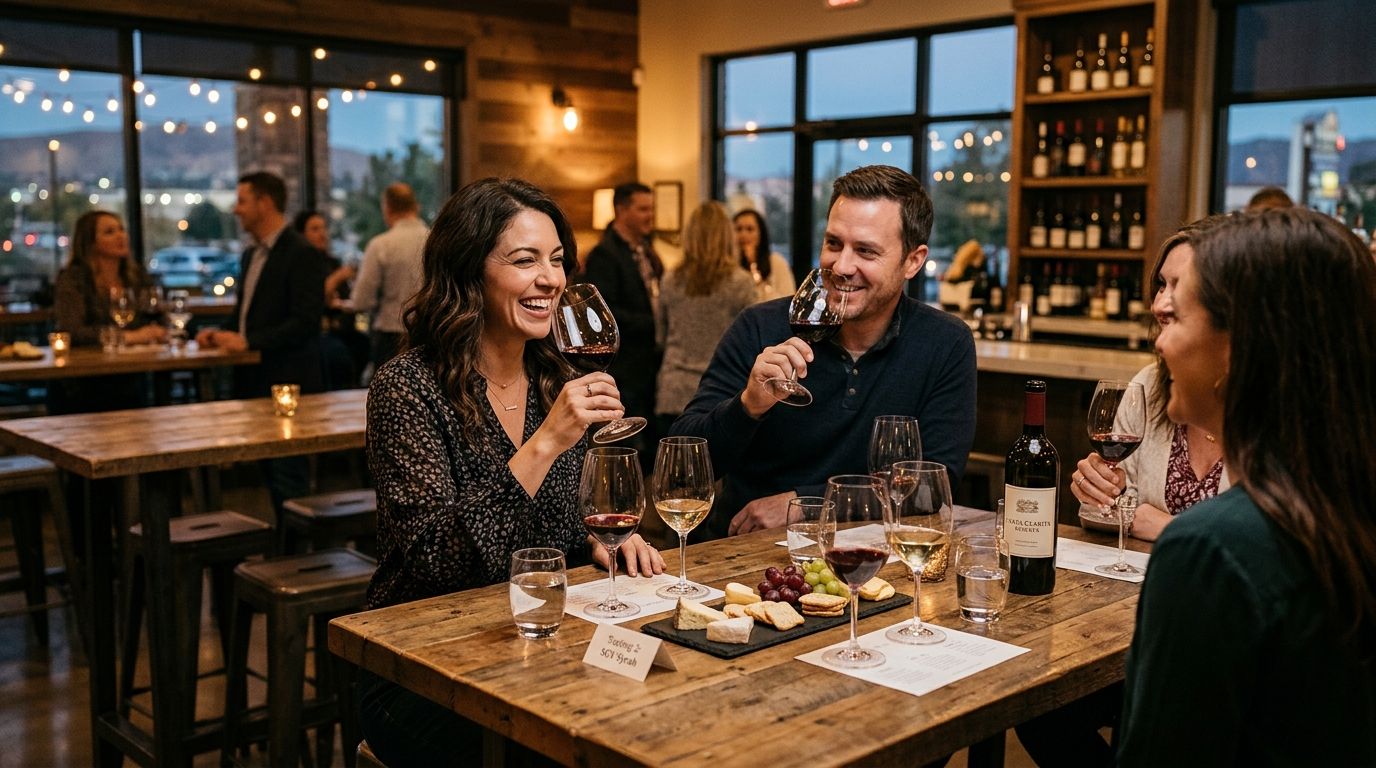
Not every bar in Santa Clarita is set up for a private tasting — a lot of rooms are built for standing-room happy hour, not a seated flight where people need a table in front of them. Society Pizza Lounge in Newhall runs private events with live jazz and DJ sets in the mix, which gives a tasting a lounge atmosphere instead of a banquet-hall feel.
The practical move is to book a private event at Society Pizza Lounge well ahead of your target date, since weekend slots at a working pizza lounge go fast once local groups start planning 2026 calendars. A private space with a fixed seating plan beats an open bar section every time for a tasting format.
Structuring the Wine Flight: 4 to 6 Pours, Light to Bold
Six pours is the practical ceiling for a casual group tasting — beyond that, palates fatigue and guests stop noticing differences between glasses. A standard tasting pour runs about 2 ounces, which is enough to evaluate a wine without over-serving six glasses in two hours.
Order matters more than selection. Run whites before reds, dry before sweet, and lighter-bodied wines before anything heavily oaked or tannic — reversing that order is the single most common mistake first-time tasting hosts make.
Pairing Small Plates With Each Pour
Food pairing at a tasting isn't about matching a wine to a full entrée — it's about matching weight and acidity to a bite-sized plate that doesn't overpower the glass. A lighter white pairs cleanest with something bright, salty, or slightly acidic; a bolder red holds up against something richer or charred.
A shareable small-plates format works better here than individual entrées, since guests are moving through six pours and don't need a full meal at each stop. Start with choosing small plates for a group dinner as a template, then adjust the order so richer plates land with your bigger reds later in the flight.
Why a Wine Tasting Night's Format Varies
- Guest count — a 15-person tasting runs looser than a 30-person one, which needs tighter pacing and a clearer host.
- Guided vs. self-pour format — a guided tasting with a host walking through each wine takes longer than a self-serve flight.
- Number of pours — four wines wraps faster than six; six adds real time for pacing and conversation.
- Food pairing complexity — a full pairing menu per pour takes more planning than a shared board across the whole flight.
- Day of week — weeknight tastings are easier to book last-minute; weekend private event slots need more lead time in 2026.
- Venue format — a lounge with live entertainment already built into the night, like a jazz set, changes the pacing versus a quiet private room.
"Do I need a sommelier to host a wine tasting?"
No — a sommelier is not required to run a group wine tasting night; a host who knows the basic pour order (light to bold, dry to sweet) can run a solid casual tasting. A sommelier adds depth for a more formal or educational event, but most social tastings run fine without one.
"How many wines should a tasting flight include?"
Four to six wines is the standard range for a casual group tasting flight, poured in roughly 2-ounce servings. Fewer than four feels thin for a full evening; more than six starts to fatigue the palate and slow the pacing.
"Can I host a wine tasting night at a restaurant or lounge instead of at home?"
Yes — a lounge with a private event option is often easier to host in than a home. A venue handles the space, the tables, and often the food pairing logistics, while you focus on the wine selection and the pour order.
FAQ
What is the best way to host a wine tasting night at a Santa Clarita lounge?
Book a private space for 15-30 guests, pour four to six wines light-to-bold, and pair each with a small plate that matches its weight. A lounge with a fixed private event space runs smoother than an open bar section.
How much wine should I pour per guest at a tasting?
A standard tasting pour is about 2 ounces per glass, across four to six wines. That keeps guests tasting rather than drinking a full glass at each stop.
Is a guided tasting better than a self-pour format?
A guided tasting with a host walking through each wine gives structure and keeps pacing tight, especially for groups over 20. A self-pour format works for smaller, more casual groups who already know the wines.
What food pairs best with a wine tasting flight?
Small, shareable plates that match the weight of each pour work best — light and acidic bites with whites, richer or charred plates with bolder reds. A full entrée per pour slows the pacing down too much.
How far in advance should I book a private event for a wine tasting?
Book 2 to 3 weeks ahead for a weekend slot in 2026, since private event spaces at popular Santa Clarita lounges fill first on Fridays and Saturdays. Weeknight bookings have more flexibility.
Can a wine tasting night include live music?
Yes — a lounge with live jazz or a DJ set already built into the evening adds atmosphere without competing with the tasting, as long as volume stays low during the pour and pairing portions.
How long does a wine tasting night usually run?
Plan for 90 minutes to two hours for a six-pour flight with pacing between wines. Shorter flights of four wines can wrap in about an hour.
Do I need to hire a sommelier for a group tasting?
No — a host who understands basic pour order (light to bold, dry to sweet) can run a casual group tasting without a sommelier. A sommelier is optional for a more formal or educational event.
One Last Thing
The part most first-time hosts skip is the palate reset between pours — a plain cracker or a sip of water between wines matters more than people expect, and skipping it is why guests start saying every wine "tastes the same" by pour four. Build a 60-second gap into your pacing plan and the whole flight reads sharper.
Book Your Wine Tasting Night
Reserve a private space at Society Pizza Lounge for your next tasting.