
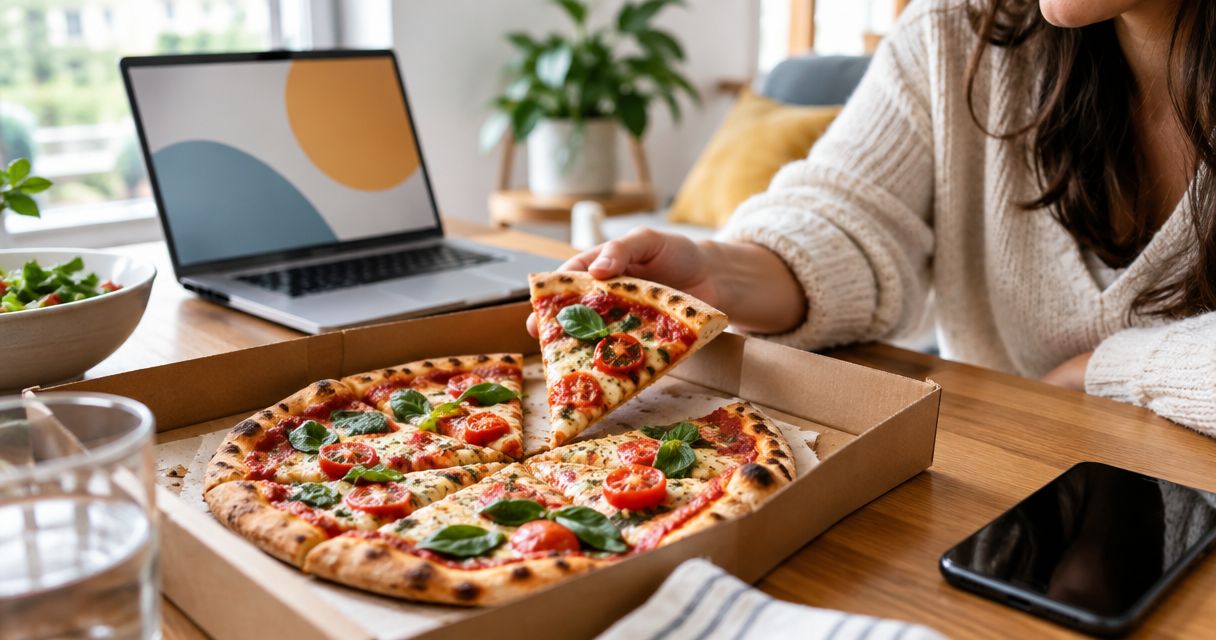
Yes, you can order gluten free pizza for delivery from restaurants that explicitly offer it and deliver to your address. The catch is preparation: a gluten-free crust does not, by itself, establish that the finished pizza is suitable for someone with celiac disease. Confirm the ingredients, kitchen handling, and order identification before you pay—not after the box reaches your door.
- Gluten free pizza for delivery requires checking both ingredients and kitchen handling, especially for celiac disease.
- Sliceofsociety offers New York-style pizza delivery; confirm gluten-free requirements directly before ordering.
- A gluten-free crust does not establish that toppings, cutters, or preparation surfaces avoid gluten cross-contact.
- Keep a medically necessary gluten-free pizza separate during serving, not just during delivery.
Why this matters
Pizza night should end with dinner, not a guessing game over the crust. Gluten-free ingredients and gluten-free preparation are different questions, and an online customization field does not answer both. For your 2026 delivery order, settle the dietary details before choosing toppings or coordinating everyone else's meal.
In Newhall and Santa Clarita, Sliceofsociety offers New York-style pizza, online ordering, takeout, delivery, and lounge dining. Treat any specific gluten-free requirement as a separate conversation with the restaurant. A business offering delivery does not automatically establish that its kitchen can meet your dietary needs.
Can you order gluten-free pizza for delivery?
Yes—but choose the restaurant by its answers about the finished pizza, not just the name of its crust. Use this sequence before placing an order, particularly when gluten avoidance is medically necessary.
- State the dietary requirement. Tell the restaurant whether you are avoiding gluten by preference, have celiac disease, or have a wheat allergy. These are not interchangeable descriptions.
- Confirm the complete ingredient list. Ask about the crust, sauce, cheese, toppings, finishing sauces, and anything applied after baking. Do not stop at the dough.
- Ask about preparation. Request an explanation of how staff handle surfaces, hands or gloves, pans, oven contact, cutters, and boxing. Ask what remains shared with wheat-based pizza.
- Confirm how the request reaches the kitchen. Find out whether the ordering method communicates your requirement clearly. A note submitted at checkout is not confirmation that the kitchen can accommodate it.
- Check the handoff. Ask how the pizza will be distinguished from other pizzas in the order. When it arrives, resolve any mismatch before serving.
If the restaurant cannot explain its process, choose another meal rather than interpreting uncertainty as reassurance. For celiac disease or wheat allergy, follow your clinician's guidance about restaurant food and cross-contact.
Which ordering approach fits your dietary needs?
The right decision depends on why you avoid gluten. This comparison is a decision aid, not a rating of restaurant kitchens or a promise that any preparation method makes a meal safe.
| Ordering situation | Best for | Benefit | Limitation | What to confirm |
|---|---|---|---|---|
| Gluten avoidance by preference | Diners without a medical gluten restriction | Lets you choose a different crust while considering taste and texture | A crust label does not describe the whole pizza | Ingredients and whether the order matches your preference |
| Medically necessary gluten avoidance | Diners following a celiac disease care plan | Focuses the conversation on ingredients and preparation together | Shared equipment and flour handling require further assessment | The kitchen's actual cross-contact controls |
| Wheat allergy | Diners with a diagnosed wheat allergy | Directs staff to the specific allergen | Gluten-free and wheat-free are not interchangeable claims | Wheat ingredients, allergen handling, and your care plan |
Best for medically necessary avoidance: an ordering process that lets you obtain clear kitchen answers before purchase. Convenience comes after that check. A polished ordering screen cannot substitute for information about how your food is made.
What does a gluten-free label actually tell you?
For your 2026 ingredient check, distinguish a regulated food-label claim from a casual description of a crust. The U.S. Food and Drug Administration's gluten-free labeling rule requires foods bearing that claim to meet ingredient requirements and contain less than 20 parts per million of gluten. That threshold is a labeling standard, not a test result for the pizza in your delivery box.
The FDA states that restaurant use of gluten-free labeling should be consistent with the federal definition. Still, seeing gluten-free beside a crust does not explain how the restaurant assembles, bakes, cuts, and boxes your order. Ask about those steps separately.
Cauliflower, vegetable-based, and alternative-flour descriptions are not substitutes for an ingredient check. A crust's headline ingredient does not reveal its entire recipe. Likewise, dairy-free and vegan describe different dietary requirements; neither means gluten-free.
Read the claim narrowly, then ask the wider question: does the finished meal meet your needs? That distinction prevents a menu description from doing more work than it actually can.
Why gluten-free delivery suitability varies
Delivery itself does not establish gluten-free suitability. The ingredients and preparation process determine what reaches the box, while handling at home determines what happens next.
- Crust formulation. An alternative flour or vegetable ingredient does not establish the complete recipe. Ask for the actual gluten-free designation and ingredient information.
- Sauces and toppings. Check the full build, including finishing sauces and garnishes. A suitable base cannot compensate for an unsuitable addition.
- Work surfaces and flour handling. Ask whether the pizza is prepared near wheat flour or on surfaces used for regular dough, and how those areas are managed.
- Equipment contact. Pans, peels, cutters, and other tools can create contact points. Ask which equipment is shared and what cleaning or separation procedures apply.
- Order communication. The person taking the request, the kitchen, and the person boxing the food need the same information. Clarify how the requirement is recorded.
- Serving at home. A shared cutter, plate, or serving utensil can introduce crumbs after delivery. Keep the dietary accommodation intact through the meal.
Do not turn this list into a do-it-yourself certification. Use it to obtain specific answers, then make a decision consistent with your medical guidance.
How do you ask about cross-contact without a long phone call?
Lead with the requirement, then ask about the process. You do not need a speech about every ingredient you have ever avoided; you need a clear account of how this order will be handled.
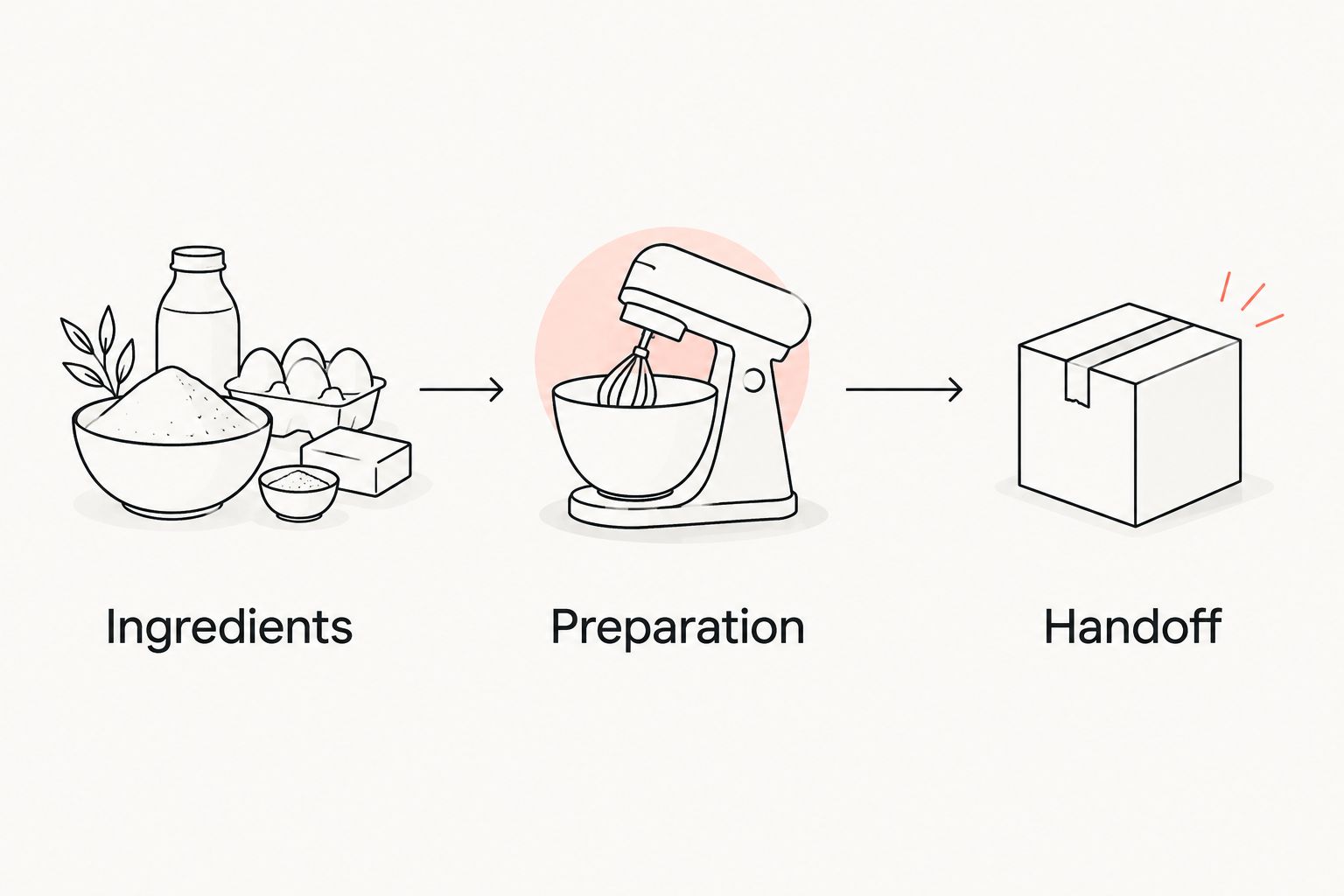
Use these three checkpoints for your 2026 order:
- Ingredients: Explain your restriction and ask whether every component of the selected pizza meets it.
- Preparation: Ask how the kitchen manages contact with wheat flour, shared surfaces, baking equipment, and cutting tools.
- Handoff: Ask how staff will identify the pizza and communicate the requirement through boxing and delivery preparation.
A useful answer describes actions. For example, staff can explain which tools are shared and how preparation is handled; a general reassurance without those details does not resolve the question. Do not supply the answer you want and ask someone to agree with it.
If you use an ordering app, keep dietary communication separate from driver instructions. Directions about the gate or doorstep do not tell the kitchen how to prepare dinner. Confirm the restaurant has received and accepted the dietary requirement before relying on the order.
Can someone with celiac disease order pizza delivery?
Someone with celiac disease needs information about both gluten-containing ingredients and cross-contact before deciding on pizza delivery. A gluten-free crust alone is not enough information. Follow your clinician's advice, and do not order a meal that depends on an unexplained preparation process.
Ask direct questions about flour, surfaces, equipment, and cutting. If staff cannot confirm how the order will be handled, choose another meal; do not treat delivery notes or removing a topping as a remedy for uncertainty.
Is gluten-free pizza also wheat-free or dairy-free?
Gluten-free pizza is not automatically dairy-free, and a gluten-free claim is not interchangeable with a wheat-allergy assessment. Cheese and crust ingredients need their own checks, and a wheat allergy requires specific allergen information.
For a group with several restrictions, keep each requirement explicit rather than collapsing them into a single special-order request. The guide to customizing a pizza order for mixed dietary needs helps frame that conversation.
What should you check when the delivery arrives?
Check that the delivered order matches the dietary request before anyone takes a slice. Look for the identification method the restaurant described, compare the order details, and contact the restaurant if something does not match. Appearance alone cannot verify gluten-free ingredients or preparation.
Set the designated pizza apart from regular pizzas. Use clean plates and serving tools, and avoid moving a cutter back and forth between boxes. If you are hosting, explain the serving arrangement before guests start helping themselves.
For your 2026 food-safety check, the U.S. Department of Agriculture advises refrigerating perishable food within 2 hours, or within 1 hour when the temperature is above 90°F. Those limits address food safety, not gluten: refrigeration does not remove gluten or correct cross-contact.
Keep leftovers separate and clearly identified. A careful restaurant handoff loses its purpose if slices later share a container with regular pizza or bread.
Where does the local pizza lounge fit?
Sliceofsociety is best for Newhall diners who want New York-style pizza and lounge dining. Its stated offering also includes small plates, cocktails, live jazz, and DJ entertainment, alongside takeout and delivery. Those are reasons to consider the business for a local pizza night, not evidence of a particular gluten-free preparation process.
The distinction matters when one person in your group has a medical restriction. Choose the restaurant only after that person's needs are addressed, rather than building the entire evening around a meal they cannot confidently assess.
FAQ
Can I order gluten free pizza for delivery if I have celiac disease?
You need ingredient and preparation information before deciding whether a delivery pizza fits your celiac disease care plan. A gluten-free crust alone does not establish suitability; follow your clinician's guidance about restaurant food and cross-contact.
Does a gluten-free crust mean the entire pizza is gluten-free?
No, a gluten-free crust does not establish the ingredients or handling of the entire pizza. Check sauces, toppings, finishing ingredients, preparation surfaces, equipment, and cutting.
Can I just put my gluten-free request in the delivery notes?
Delivery notes alone do not confirm that the kitchen can meet a gluten-free requirement. Contact the restaurant before ordering and ask how the request reaches the staff preparing the food.
Is cauliflower pizza crust always gluten-free?
No, cauliflower in the crust name does not establish the complete recipe. Check the ingredient information and the gluten-free claim rather than relying on the headline ingredient.
Does baking a pizza remove gluten?
No, ordinary pizza baking does not make gluten-containing dough safe for someone with celiac disease. Suitable ingredients and appropriate cross-contact controls must be addressed before cooking.
Does Sliceofsociety offer gluten-free pizza delivery?
Confirm gluten-free ingredients and preparation directly with Sliceofsociety before placing an order. The restaurant offers pizza delivery, but that does not by itself establish a gluten-free crust or a preparation process suitable for celiac disease.
Should I keep gluten-free pizza separate from regular pizza at home?
Yes, keep the designated pizza separate and use clean serving utensils and plates. Avoid sharing cutters or transferring crumbs between pizzas, especially when gluten avoidance is medically necessary.
One last thing
The last cutter matters as much as the first ingredient. A carefully selected crust does not protect dinner from a crumb-covered serving tool at home. Before your next pizza night in 2026, set out the clean plate and designated utensil first; it is a small hosting decision that preserves the care taken with the order.