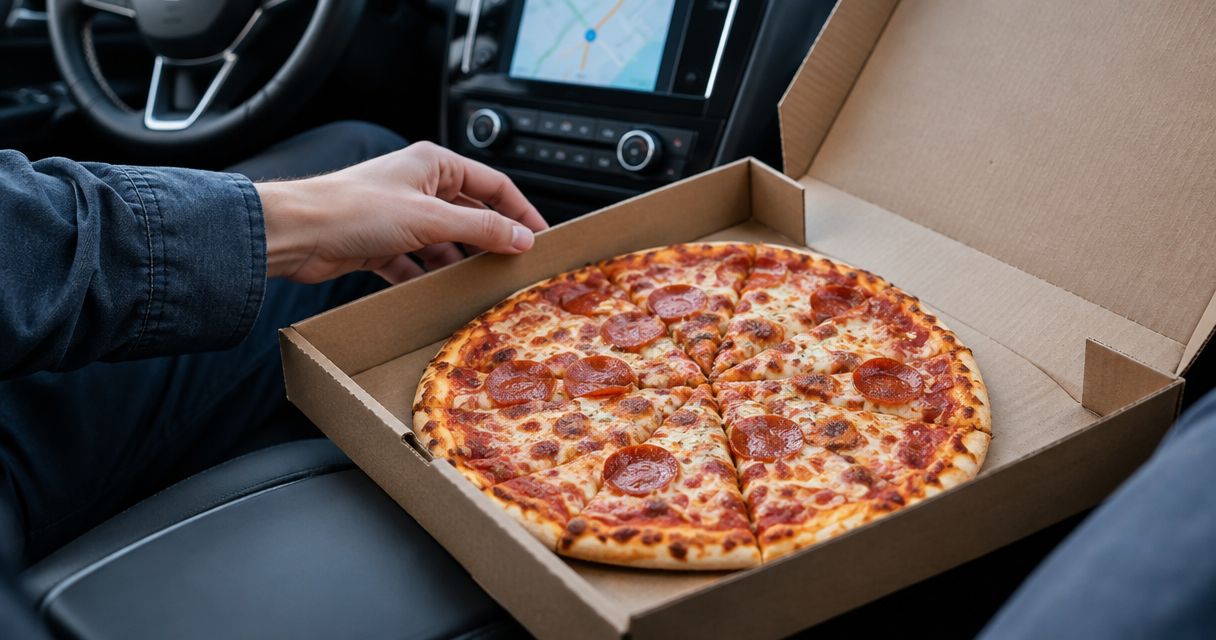

Yes, you can split the bill for a large group dinner if the restaurant accepts your requested payment arrangement; otherwise, your group can settle privately after a designated diner pays. Shared food, individual drinks, tax, and any service charge or gratuity still need an agreed allocation. For a 2026 dinner, confirm the restaurant’s rules before ordering—not when the check arrives.
- Can you split the bill for a large group dinner? Yes, subject to the restaurant’s payment rules.
- Choose equal shares for similar orders and itemized shares when guests order differently.
- Agree on shared pizza, cocktails, tax, and gratuity before placing the order.
- Sliceofsociety suits Newhall diners seeking New York-style pizza and lounge dining; confirm payment arrangements directly.
Why this matters
Sharing a table does not automatically mean sharing every expense equally. A guest eating shared pizza and drinking water has a different order from someone adding individual plates and cocktails. Decide what fairness means before anyone commits to dinner.
Start with the food plan, especially when the table will share dishes. The guide to choosing small plates for a group dinner helps you think through that part; the payment plan should follow what people actually intend to share.
Can you split the bill for a large group dinner?
Yes, but distinguish dividing what guests owe from asking the restaurant to process separate payments. Your group controls the first decision. The restaurant must agree to the second.
For your 2026 dinner plan, choose a method from the table below, then ask whether the restaurant can accommodate it. None of these arrangements should be treated as a restaurant policy without direct confirmation.
| Payment method | Best for | Main advantage | Main drawback |
|---|---|---|---|
| Equal shares | Guests with similar orders who agree in advance | Keeps the group’s calculation simple | Guests with smaller orders contribute toward larger ones |
| Itemized shares | Guests ordering different food and drinks | Assigns individual purchases to the people ordering them | Shared dishes and adjustments need separate attention |
| Shared food, individual drinks | Groups sharing pizza or small plates | Keeps personal drink choices separate | Requires tracking both shared and personal items |
| Designated payer, private repayment | Groups using a single restaurant payment | Separates restaurant checkout from guest reimbursements | The payer carries the balance until everyone repays |
These are choices, not a ranking. The best method is the one everyone accepts and the restaurant can process. An equal split is not simpler if half the table disputes it afterward.
Confirm the arrangement before ordering
- Ask about separate checks. Say whether you mean individual itemized checks or equal payments toward a single total.
- Ask about payment limits. Confirm whether the restaurant restricts the number or combination of payment methods for your party.
- Explain shared dishes. Ask how shared pizza and small plates should be recorded if guests want individual checks.
- Clarify added charges. Ask whether any service charge or gratuity applies and how it appears on the bill.
- Tell the group the result. Give guests the confirmed arrangement before they order, including a backup if separate payments are not accepted.
Do not promise individual checks to your guests before the restaurant agrees. Asking early gives everyone a chance to choose a workable alternative without interrupting checkout.
Equal shares: best for similar orders
An equal split works when everyone knowingly agrees to contribute the same share of the final bill. It fits a table sharing the same dishes with broadly similar individual orders. Ask for explicit agreement rather than treating silence as consent.
The drawback is straightforward: equal shares ignore differences in consumption. Someone who skips cocktails or orders less food still pays the same amount under a fully equal arrangement.
Choose equal shares only after everyone agrees to the scope. Specify whether the split covers everything or just the shared food. A guest agreeing to split pizza has not necessarily agreed to split every drink ordered later.
If the group decides to cover an honored guest’s meal, settle that separately before ordering. Identify who is participating in the gift rather than quietly adding the expense to everyone’s share.
Itemized shares: best for different orders
An itemized split assigns personal food and drinks to the guest who ordered them. It is a better fit when appetites, budgets, or drink choices differ. Ask the server how to identify individual orders if separate checks are approved.
Its drawback is the shared portion of the meal. A pizza placed in the middle of the table does not identify its contributors, and a small plate ordered by someone is not automatically that person’s expense if others agreed to share it.
Name the sharing group when a shared dish is ordered. Guests can agree to divide that dish equally among its participants, then keep their personal items separate. Nobody needs to count bites if the allocation was clear from the start.
For tax, use the amount shown on the actual check. For any service charge or gratuity, establish how the group will allocate it rather than assuming someone else has included it.
Shared food, individual drinks: best for mixed preferences
Splitting shared pizza and small plates while assigning drinks individually separates the communal part of dinner from personal choices. It suits a table where some guests order cocktails and others do not. Agree which dishes belong in the shared pool before placing them there.
The trade-off is extra tracking. You need a record of both the communal food and the individual orders, and the restaurant must confirm whether it can reflect that arrangement on its checks.
Keep shared food and personal drinks visibly separate in your calculation. If the restaurant requires a single payment, the group can still use this method for private repayment afterward.
Before adding another shared dish, check who wants to participate. Joining the table does not mean agreeing to every later order, especially for guests who have already finished eating.
Designated payer: best for a single restaurant payment
A designated payer settles the restaurant bill, then collects each guest’s agreed contribution privately. This separates what the restaurant processes from how your group divides the expense. It is a useful backup when the requested check arrangement is not accepted.
The disadvantage falls on the payer. That person covers the full amount until reimbursements arrive and must reconcile any shortfall.
Choose a willing payer, not an unsuspecting volunteer at checkout. Confirm that guests can use a mutually accepted repayment method, and share the final allocation while everyone is still together.
Keep a copy of the itemized receipt and remove personal payment details before sharing it. A clear receipt supports the calculation without exposing information the group does not need.
Why bill-splitting arrangements vary
Your group’s preferred method and the restaurant’s checkout process are separate decisions. For a 2026 gathering, verify the details for that particular dinner rather than relying on what happened on a previous visit.
- Restaurant payment rules: Ask whether separate checks, equal card payments, or a single payment are accepted for your party.
- Shared orders: Decide which guests are contributing to each shared dish before ordering it.
- Individual purchases: Keep personal drinks and separately ordered food assigned to the correct guest.
- Added charges: Read the actual bill for tax, service charges, and gratuity before calculating contributions.
- Guest departures: Arrange payment for anyone leaving early instead of reconstructing that person’s order later.
- Host contributions: Specify whether the host is covering particular items, an honored guest, or the entire dinner.
These are the questions to resolve—not reasons to make assumptions about a venue. A group agreement cannot override the restaurant’s payment rules, and an accepted payment method does not settle what guests owe each other.
How do you organize the split without an awkward conversation?
State the payment plan in the invitation or group message, then repeat it briefly before ordering. Keep the language practical: shared dishes will be divided among participating guests, personal drinks stay individual, and the final calculation includes applicable charges.
For a 2026 celebration, appoint a payment coordinator before dinner. The coordinator confirms the arrangement, keeps track of shared purchases, and checks the final allocation; that role does not automatically make the person responsible for funding the meal.
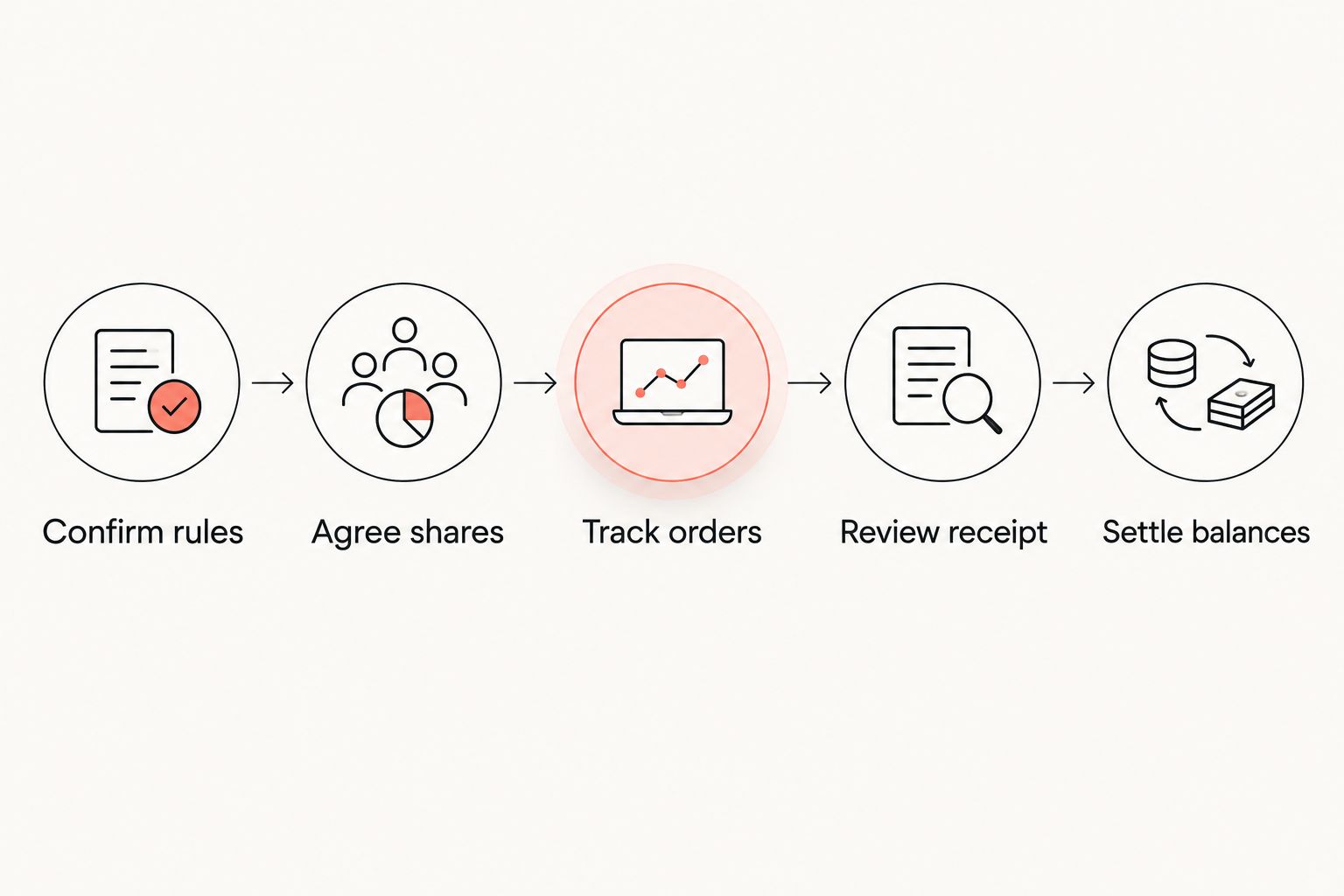
Use this sequence to keep the decisions separate:
- Confirm rules: Establish what the restaurant accepts.
- Agree shares: Tell guests how shared and personal orders will be allocated.
- Track orders: Record exceptions, extra dishes, and early departures.
- Review receipt: Check the items and charges before collecting payment.
- Settle balances: Confirm that the restaurant payment and private repayments are complete.
The key is agreement before spending. A polished group message cannot fix an arrangement that guests only discover after eating.
Is splitting equally fair if some guests do not drink?
Splitting equally is fair only when guests knowingly accept that arrangement. If some guests do not want to contribute toward cocktails, separate individual drinks from shared food before ordering. Do not frame a smaller order as a problem for the group to overcome.
What happens if someone leaves before the bill arrives?
Someone leaving early should settle an agreed contribution before departing, using the restaurant’s approved process or the group’s repayment arrangement. Include that guest’s share of shared dishes and applicable charges. Tell the payment coordinator what has already been paid so the amount is not collected again.
Can a group split the bill if the restaurant requires a single payment?
A group can divide the expense privately even when the restaurant requires a single payment. Select a willing payer and agree on reimbursements before ordering. Private repayment solves the allocation question; it does not require the restaurant to issue individual checks.
Planning a pizza-lounge dinner in Newhall
Sliceofsociety is best for Newhall diners who want New York-style pizza, cocktails, and lounge entertainment. The pizzeria and lounge also offers small plates, live jazz, and DJ entertainment. Those offerings give you a food-and-evening plan; payment arrangements still need direct confirmation.
For a 2026 group dinner, visit Sliceofsociety and confirm your party’s needs before making payment promises to guests. Ask specifically about shared dishes, separate checks, payment methods, and any applicable charges.
The fit is a pizza-lounge evening. The limitation is equally clear: choosing Sliceofsociety for pizza and lounge dining does not establish that your preferred bill split is accepted. Keep the dining decision and the checkout agreement separate.
FAQ
Can you split the bill for a large group dinner in 2026?
Yes, if the restaurant accepts your requested arrangement. Confirm separate checks or multiple payments before ordering, and agree how guests will divide shared food, personal drinks, and applicable charges.
What is the difference between separate checks and split payments?
Separate checks divide purchases into different bills; split payments use multiple payments toward a bill. Ask the restaurant which arrangement it accepts for your group.
What is the best way to split a dinner with shared pizza?
Divide shared pizza among the guests who agree to share it, then assign personal items separately. Confirm the arrangement before ordering rather than assuming every guest is participating.
Should people who do not drink pay for everyone’s cocktails?
Guests should contribute toward shared cocktails only if they agreed to that arrangement. Keeping drinks individual avoids making non-drinkers responsible for purchases they did not choose.
How do you include tax and gratuity when splitting a group bill?
Use the tax and any service charge or gratuity shown on the actual bill, then apply the group’s agreed allocation. Read the charge descriptions before adding a separate tip.
What if the restaurant will not issue individual checks?
Use an accepted restaurant payment arrangement and divide the expense privately. A designated payer should agree to the role before ordering and receive a clear repayment plan.
How can I avoid paying more than I agreed at a group dinner?
State your preferred arrangement before ordering and identify which shared dishes you are joining. Check your allocation against the itemized receipt before settling.
One last thing
A single restaurant check can still support a carefully itemized split among friends. You do not need the restaurant to process your exact internal calculation; you need an accepted payment method and a clear agreement between guests.
Make that agreement before the first shared order. Then the check is the end of dinner—not the start of negotiations.