Yes—takeout pizza can still be good after a 20-minute drive, though the crust usually loses some crispness inside the box. The bigger catch is trapped steam and extra waiting before or after the trip, not the drive alone; head straight home, keep the box level, and use dry heat if the bottom needs crisping.
- Is takeout pizza still good after a 20 minute drive? Yes—expect softer crust, not necessarily a ruined dinner.
- Keep the pizza box level, leave its built-in vents clear, and skip errands after pickup.
- Dry heat helps restore crust texture; microwaving prioritizes convenience over crispness.
- Society Pizza Lounge offers New York-style pizza for takeout and dine-in in Newhall/Santa Clarita.
Why this matters
A pizza box solves a transport problem, not a texture problem. It protects dinner on the road, but hot food releases moisture into that enclosed space. The result is a familiar trade-off: keeping warmth in also keeps steam near the crust.
Society Pizza Lounge offers New York-style pizza for takeout and dine-in, so you can choose between dinner at home and eating without a car ride. Neither choice needs a complicated strategy. For your 2026 takeout routine, make pickup the last stop and have the table ready before you leave.
Is takeout pizza still good after a 20-minute drive?
Yes—a 20-minute drive is compatible with good takeout pizza, but it does not guarantee oven-fresh texture. A crisp underside and a warm, flexible slice are different standards. Decide which matters more before you order.
There is no reliable arrival temperature based on drive time alone. Starting temperature, packaging, weather, and any waiting all affect what reaches your table. Judge the actual pizza rather than treating the drive as a freshness countdown.
| Your priority | Best for | Main advantage | Main drawback | Recommendation |
|---|---|---|---|---|
| Eat takeout on arrival | Convenience at home | No extra cooking step | Crust can feel softer after the trip | Serve promptly if the texture suits you |
| Re-crisp takeout | A firmer underside at home | Dry heat addresses softened crust | Adds a cooking step and can dry the edges | Use when texture matters more than immediate serving |
| Eat at the restaurant | Avoiding transport-related cooling | Removes the boxed car journey | Requires dining out rather than eating at home | Choose when you want to avoid reheating |
The useful distinction is good after transport versus unchanged after transport. A pizza can remain enjoyable while its cheese firms and its crust becomes more flexible. Those changes do not automatically mean the restaurant made a bad pizza or that the trip was too long.
What should you check when you open the box?
Look at the underside of a slice and feel whether the crust still has the texture you want. A damp bottom calls for a different response than a dry edge: the former benefits from crisping, while the latter does not need more drying.
Check whether you actually want to reheat before switching on an appliance. If the pizza is ready to eat and you enjoy the texture, serve it. Reheating is a tool, not a required ceremony after every pickup.
How do you keep pizza good during the drive home?
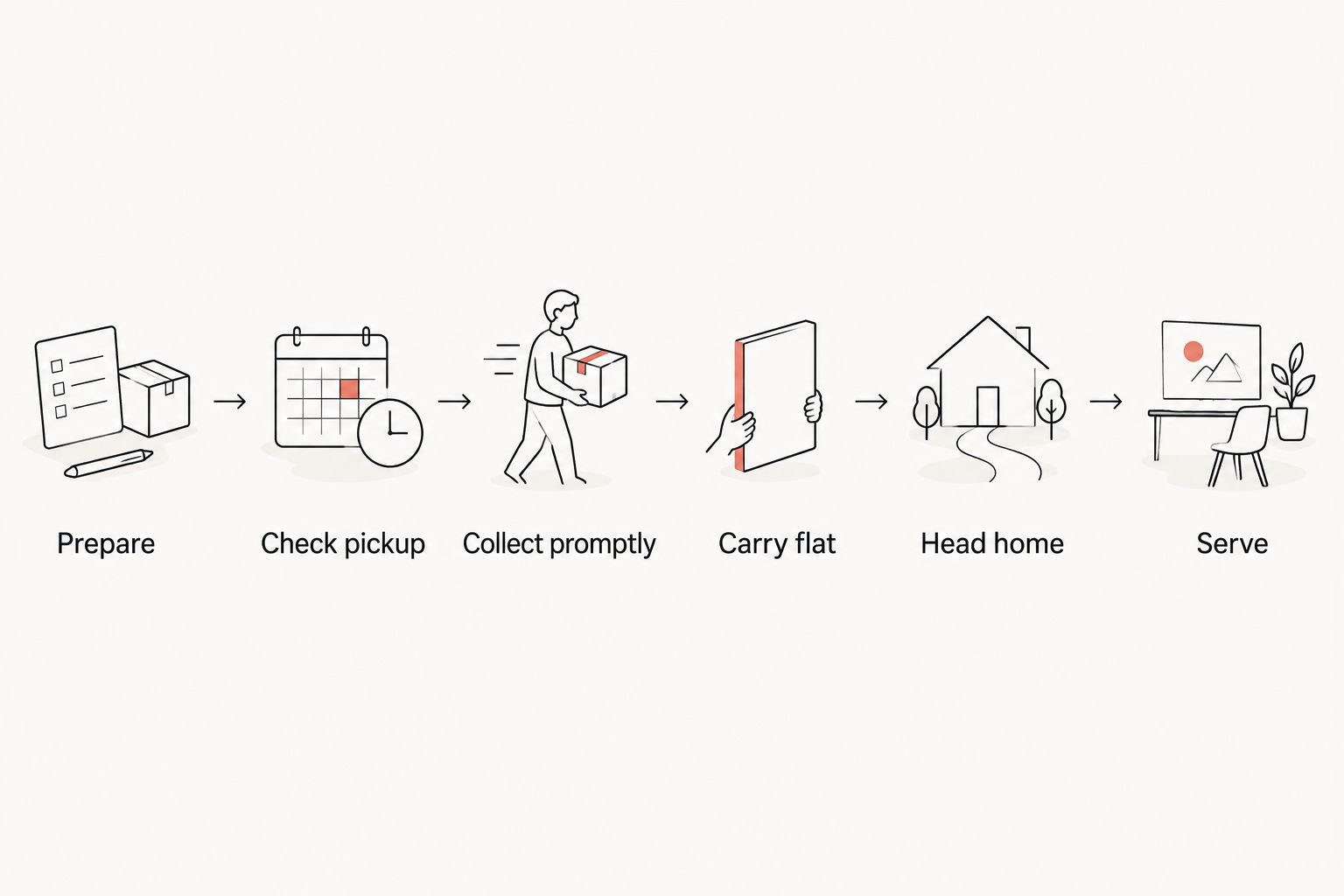
Build your pickup around the moment you intend to eat. Ordering first and sorting out the rest of the evening afterward creates avoidable waiting. The following sequence works for a straightforward 2026 pizza pickup without relying on a promised cooking or handoff time.
- Prepare before leaving. Clear a serving space and decide whether you will eat immediately or reheat. If you plan to use an oven, follow its instructions and never leave it operating unattended while you collect food.
- Check the pickup estimate. Use the estimate provided with your order rather than assuming the drive and cooking time will line up. For the ordering side, see how to order online for pickup in Newhall.
- Collect the order promptly. Confirm that you have the correct food before leaving. Discovering a missing box at home adds a different problem to dinner.
- Carry the box flat. Support the base rather than gripping only an edge. Keep the box upright and avoid tilting it through doorways or into the car.
- Head straight home. Leave groceries, fuel stops, and other errands for another trip. Do not open or adjust the pizza box while driving.
- Serve or reheat on arrival. Open the box once you are safely home, check the texture, and act. Do not leave dinner boxed while everyone decides what to watch.
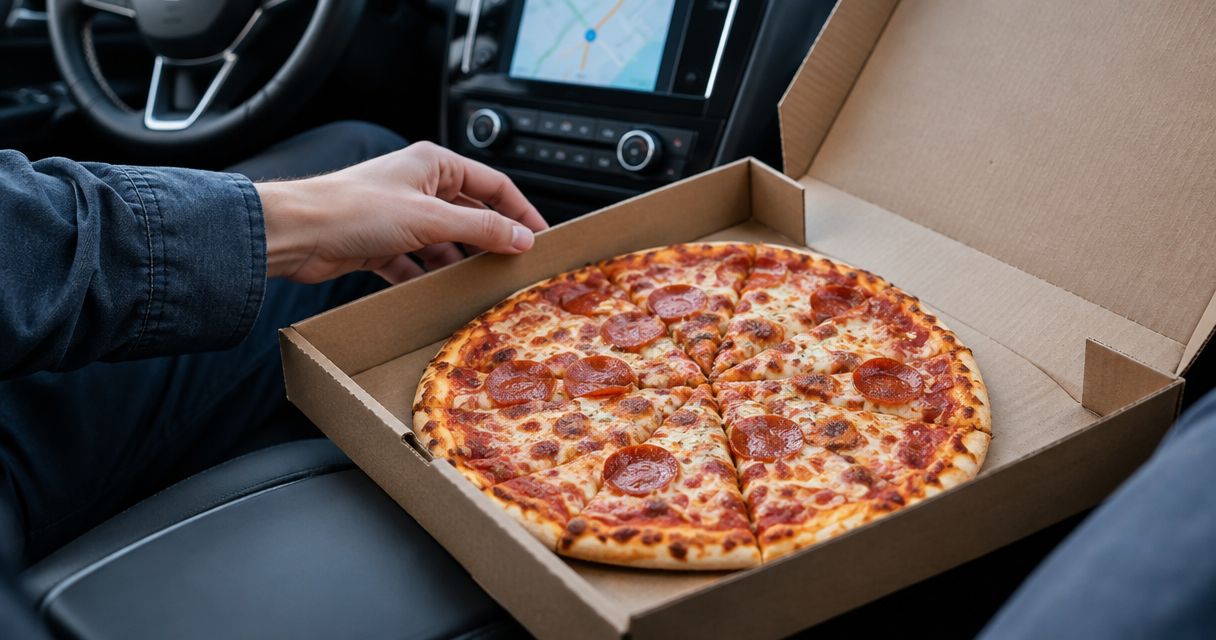
A stable position matters as much as a short route. Choose a clean, level place where the box will not slide during normal braking, and keep it away from direct air-conditioning airflow. Never hold the box while driving or position it where it interferes with vehicle controls.
Keep the lid closed during transport and leave the box's existing vents unobstructed. Do not improvise by cutting packaging in the car or carrying an open box. The goal is protected transport, not maximum ventilation at the expense of cleanliness or safe handling.
Why takeout pizza quality varies
The same 20-minute route does not produce the same result for every pizza. These factors explain why one order arrives with a firmer base while another needs attention before serving:
- Time before pickup. The drive does not include time the finished pizza spends waiting for collection. Prompt pickup reduces that additional hold.
- Moisture in the toppings. Toppings contribute moisture as well as flavor. A wetter surface gives the crust more moisture to contend with during transport.
- Steam inside the box. Hot pizza releases water vapor. As that vapor cools and condenses, the enclosed environment becomes less friendly to a crisp crust.
- Heat loss during travel. Packaging and the surrounding temperature affect cooling. A car ride alone cannot tell you how hot the pizza will be when you arrive.
- Box position. Tilting encourages loose toppings and melted cheese to shift. Keeping the base supported helps the pizza arrive intact.
- Waiting after arrival. A box left on the counter continues to cool. Set out plates before collection so serving does not become another delay.
Do not confuse those quality factors with a food-safety test. A soft crust is not proof that pizza is unsafe, and a crisp crust is not proof that it was handled safely. Texture and safe storage need separate decisions.
What is the best way to re-crisp takeout pizza?
Use dry heat when the problem is a soft underside. An oven works for several slices, while a skillet gives you direct contact with the bottom of a slice. A microwave is convenient for warming but is not the right choice when crispness is the goal.
| Method | Best for | What it does well | Main drawback |
|---|---|---|---|
| Oven | Several slices together | Reheats with dry heat | Needs preheating and attention to drying edges |
| Skillet | A small serving | Applies heat directly to the crust | The underside can scorch before the top warms |
| Microwave | Quick warming when texture is secondary | Requires little setup | Does not restore a crisp base |
For an oven, transfer pizza to cookware suitable for the appliance and follow the manufacturer's directions. Watch the food rather than relying on a universal reheating time: slice thickness, starting temperature, and the appliance all change the result. Never put the cardboard pizza box in the oven.
For a skillet, place the slice in a suitable pan and monitor the underside as it heats. Adjust the heat if the base browns before the topping warms. Adding water or trapping steam works against the specific goal of drying and crisping the bottom.
Avoid reheating the entire order simply because one slice feels soft. Work with what you plan to eat, and refrigerate leftovers promptly. Repeatedly warming the whole pizza adds handling without solving dinner any better.
Is pizza safe after a 20-minute drive?
A 20-minute drive alone does not establish whether pizza is safe. What matters is its full time outside safe temperature control, including waiting before pickup, stops on the way home, and time on the table afterward.
For food-safety decisions in 2026, follow the USDA Food Safety and Inspection Service's consumer guidance for perishable food and leftovers:
- Refrigerate within 2 hours when perishable food is not being kept safely hot or cold.
- Use a 1-hour limit above 90°F. Hot conditions shorten the time available for unrefrigerated handling.
- Keep the refrigerator at 40°F or below. Divide leftovers into suitable storage containers rather than relying on a large box that fits poorly.
- Reheat leftovers to 165°F, checking with a food thermometer rather than judging by melted cheese alone.
- Use refrigerated leftovers within 3–4 days. Freeze them instead if you do not plan to eat them within that window.
These are safety limits, not promises about flavor or crispness. Refrigerate pizza promptly rather than using the full allowance as a serving target. If food has exceeded safe handling limits, reheating does not make it a safe rescue project.
Do not use smell as permission to ignore an unsafe storage history. If you do not know how long pizza has been sitting out, an appealing aroma cannot answer that question. Keep the timeline clear from collection through storage.
Should I choose takeout or dine-in for New York-style pizza?
Choose takeout when eating at home matters more than avoiding every texture change. Choose dine-in when you want to remove the boxed journey from the experience. That is a preference decision, not a contest between good and bad pizza.
Society Pizza Lounge is best suited to Newhall/Santa Clarita diners looking for New York-style pizza with both takeout and lounge dining options. Its takeout option brings dinner home; its dine-in option avoids transport-related cooling. The limitation is straightforward: takeout cannot preserve every just-served quality through a car journey.
For a 2026 family dinner, decide where you want to eat before placing the order. If the answer is home, accept a little softness or plan to re-crisp. If the answer is crisp crust without a reheating step, eating at the restaurant removes that extra work.
Can I keep takeout pizza in the box until everyone gets home?
A 20-minute drive is only part of the waiting time, so do not treat arrival as a fresh start for the safety clock. Serve promptly or refrigerate the pizza within USDA guidance. A closed box is packaging, not temperature-controlled storage.
If people are eating at different times, portion and refrigerate the later servings. That gives each person a clear reheating step instead of leaving the whole order on the counter. Keep only the food being served out for the meal.
Does opening the box stop pizza from getting soggy?
A 20-minute drive still allows steam to collect inside a closed box, but opening the lid also releases heat. Once you are safely home, open the box to serve or transfer the pizza for reheating. Do not transport it uncovered to chase a crisper crust.
The better fix is to remove avoidable waiting and use dry heat when needed. Venting alone cannot guarantee a crisp base, especially when the pizza itself carries plenty of moisture.
FAQ
Is takeout pizza still good after a 20 minute drive?
Yes, takeout pizza can still be good after a 20-minute drive, although trapped steam can soften the crust. Collect promptly, drive straight home, and serve or re-crisp on arrival.
Will my pizza still be hot after driving home?
Drive time alone cannot guarantee that pizza will still be hot. Starting temperature, packaging, weather, and waiting before pickup all affect its arrival temperature.
Should I leave the pizza box open in the car?
No—keep the pizza protected in its box during transport and leave existing vents clear. Open it for serving once you are safely home.
Is the oven or microwave better for takeout pizza?
An oven is better when your goal is a crisper crust; a microwave prioritizes quick warming. Transfer pizza to suitable cookware and never heat its cardboard box.
How long can takeout pizza sit out before refrigeration?
USDA guidance sets a 2-hour limit for perishable food outside safe temperature control, reduced to 1 hour above 90°F. Include transport and serving time rather than starting the clock when you reach home.
What temperature should I reheat leftover pizza to?
Reheat leftover pizza to 165°F under USDA consumer guidance. Use a food thermometer; melted cheese alone does not confirm the temperature.
Does Society Pizza Lounge offer takeout and dine-in?
Society Pizza Lounge offers New York-style pizza for takeout and dine-in in Newhall/Santa Clarita. Choose takeout for dinner at home or dine-in to avoid the boxed car journey.
One last thing
For your next pizza pickup in 2026, fix the time around the drive before worrying about the drive itself. Put out plates, clear the table, and make collection your final errand. A direct trip followed by prompt serving is a better plan than rushing home and leaving the box unopened.