
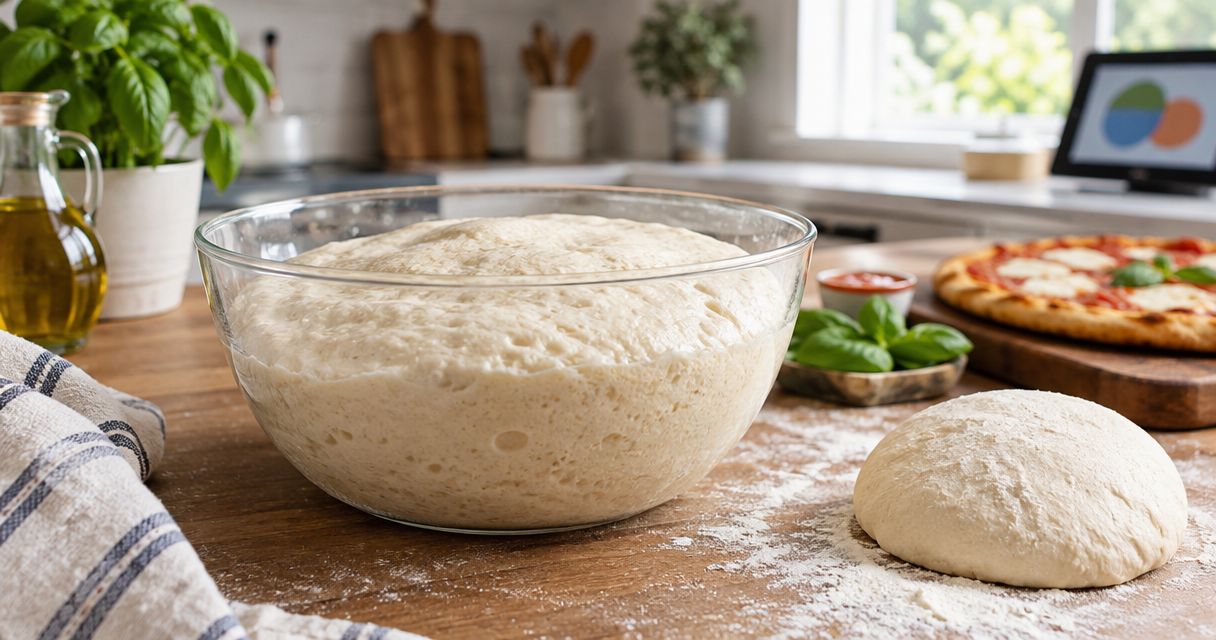
Naturally fermented pizza dough is generally an overnight or multiday project when you start with an established sourdough starter, but the recipe and dough temperature determine the actual schedule. That planning window excludes building a new starter from scratch and must leave room for the final dough rest, oven preheating, and baking.
- How long does naturally fermented pizza dough take? Treat sourdough pizza as an overnight or multiday project, not a fixed-hour promise.
- An active sourdough starter and dough temperature matter more than the fermentation label.
- Cold fermentation slows the process; refrigerated dough still needs the final preparation specified by your recipe.
- Judge readiness by expansion, bubbles, and stretch—not the clock alone.
Why this matters
A dough recipe gives you a schedule. Your kitchen determines how closely the dough follows it. Warm dough ferments faster than cold dough, and a sluggish starter can push dinner beyond the time you planned.
Choose your recipe around your dinner deadline, not the other way around. If you're planning a low-key weeknight pizza dinner, decide whether you want a baking project or dinner without managing fermentation.
For your 2026 home-baking plans, the useful distinction is elapsed time versus hands-on work. Mixing and shaping require your attention; much of fermentation happens while you do something else. A long schedule does not mean constant work, but it does require planning.
How long does naturally fermented pizza dough take to make?
Naturally fermented pizza dough usually needs an overnight or multiday schedule, depending on the method. There is no universal hour count because the amount of starter, its activity, and the dough's temperature all change fermentation speed.
First, check what the recipe means by naturally fermented. Sourdough pizza uses a starter containing yeasts and bacteria. A long-fermented dough made with commercial yeast follows a different formula, even when both recipes include refrigeration.
Use the recipe's complete timeline rather than its headline fermentation time:
| Stage | What happens | What to check before moving on |
|---|---|---|
| Starter preparation | You feed an established starter for the recipe | The starter shows the activity the recipe specifies |
| Mixing and development | You combine ingredients and develop dough strength | The dough becomes cohesive and gains structure |
| Bulk fermentation | The dough ferments before final dividing or shaping | Expansion, bubbles, and the recipe's target dough condition |
| Cold fermentation, if used | Refrigeration slows fermentation | The dough follows the recipe's storage schedule |
| Final rest | Dough balls relax and continue fermenting as directed | The dough opens without excessive resistance |
| Baking | Heat sets the crust and cooks the pizza | The crust and underside finish baking |
Total dough time includes more than the main rise. A recipe that describes an overnight refrigerator rest can still require starter preparation before that rest and dough handling afterward.
Keep that distinction in your 2026 recipe notes. Record when you mixed the dough, when it entered the refrigerator, and what it looked like before baking. Those observations are more useful than remembering that the batch took “about a day.”
Room-temperature fermentation: best for watching dough develop
A room-temperature method keeps the dough out of the refrigerator during the fermentation stages specified by the recipe. You can follow its expansion and feel its changing texture without a separate cold-storage stage.
Best for: a baking day when you can check the dough and adjust your timing. The advantage is direct observation; the drawback is that room temperature changes with the weather, heating, and kitchen activity.
Do not assume room temperature means the same thing in every recipe. Dough sitting beside a working oven experiences a different environment from dough resting in a cool room. The temperature of the dough itself matters, not just the thermostat.
Keep the container covered as directed so the surface does not dry out. Follow the recipe's readiness cues rather than leaving the dough out indefinitely to satisfy a planned dinner time.
Cold fermentation: best for advance planning
Cold fermentation places the dough in the refrigerator for part of its development. Refrigeration slows fermentation; it does not act as an instant pause button.
Best for: preparing dough ahead of the day you intend to bake. The advantage is a schedule spread across days; the drawback is refrigerator space and the need to account for the recipe's final rest.
Freshly refrigerated dough takes time to cool through. Its size, container, and starting temperature affect that cooling, so moving it into the refrigerator does not erase the fermentation that has already happened.
Cold dough also feels firmer and resists stretching. That resistance is not, by itself, proof that it needs more fermentation. Check whether the recipe calls for warming or relaxing the dough before opening it.
A mixed schedule: best for combining development and flexibility
A mixed schedule uses a room-temperature stage and a refrigerated stage. Some recipes refrigerate the dough before dividing; others refrigerate individual dough balls.
Best for: bakers following a recipe designed around advance preparation. The advantage is control over different stages; the drawback is that changing their order changes the process.
Do not borrow the warm rise from one recipe and the refrigerator schedule from another without understanding both formulas. Starter quantity, flour, water, and temperature work together. A longer schedule is not automatically a better schedule.
| Method | Best for | Main advantage | Main limitation |
|---|---|---|---|
| Room-temperature fermentation | Watching dough throughout the baking day | You can observe development directly | Kitchen temperature affects timing |
| Cold fermentation | Advance preparation | The schedule extends across days | Cooling and final preparation need planning |
| Mixed schedule | Following a staged baking plan | Warm and cold stages serve different purposes | Stage order and formula must match |
Why naturally fermented pizza dough timing varies
The same recipe can finish differently in different kitchens. These factors explain why a clock alone cannot tell you when to shape the dough:
- Starter activity: A recently refreshed, active starter behaves differently from a starter that is sluggish or needs further feeding. Follow the recipe's starter instructions.
- Starter quantity: Changing the amount of starter changes the formula and fermentation pace. Do not add extra starter while leaving the rest of the recipe unchanged.
- Dough temperature: Warmer dough generally ferments faster. Mixing water, room conditions, and refrigeration all influence its temperature.
- Flour and hydration: Flour choice and the amount of water affect dough structure and handling. Read the recipe's cues in that context.
- Salt and other ingredients: Salt affects fermentation and dough strength. Substitutions change more than flavor.
- Fermentation stage: An undivided batch and individual dough balls cool and handle differently. Compare like stages when judging progress.
For a repeatable 2026 baking routine, change one part of your method at a time. If you change flour, starter quantity, and refrigerator timing together, you lose a clear explanation for the result.
How do you know naturally fermented pizza dough is ready?
Look for the combination of expansion, trapped gas, and workable structure described in your recipe. No single bubble, smell, or finger poke proves that every pizza dough is ready.
Ready dough should have developed gas while retaining enough strength to shape. A dough that remains dense and tight needs a different response from dough that has spread out and lost structure.
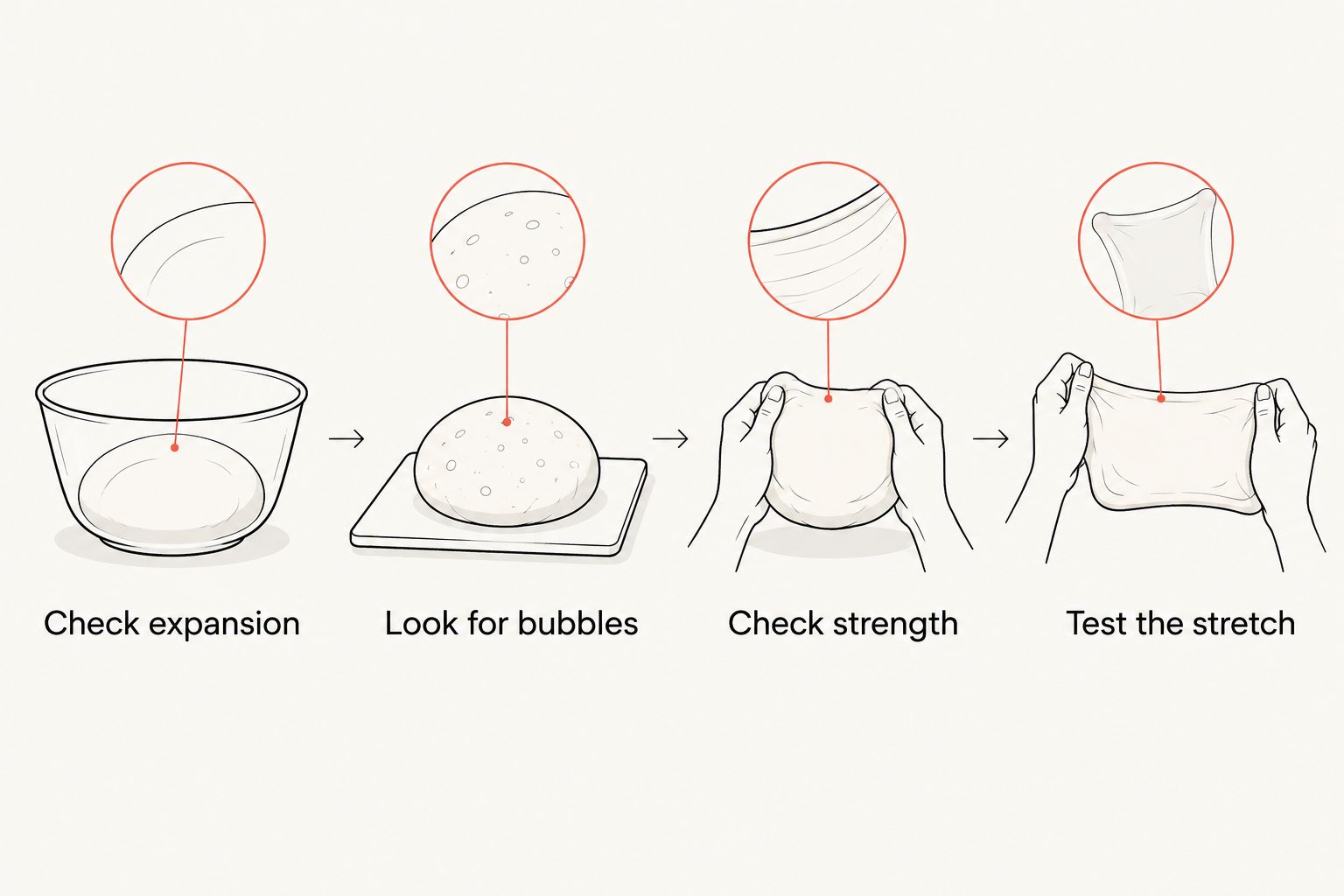
Use this sequence when checking your batch:
- Check expansion. Compare the dough with its starting level. A straight-sided container makes changes easier to see; do not assume every recipe requires doubling.
- Look for bubbles. Check the sides and surface for signs of gas production. Visible bubbles support the assessment but do not replace the other checks.
- Check strength. Handle the dough gently as your recipe directs. Notice whether it holds together or tears and collapses.
- Test the stretch. Before topping, see whether the dough opens without forceful pulling. Cold temperature and insufficient rest can also cause resistance.
Record those observations alongside the recipe time. Your 2026 dough notes should describe what happened, not just when you checked it. That makes the next batch easier to compare.
Can you make naturally fermented pizza dough the same day?
Same-day naturally fermented pizza dough is possible with a recipe designed for it and an active, established starter. It is not a reliable shortcut for a formula intended to ferment overnight or across several days.
Choose a same-day recipe before you mix. Do not turn up the heat or add starter halfway through simply to force a slower formula toward dinner.
The trade-off is flexibility. A same-day plan leaves less room for a slow starter or cool kitchen, so avoid making an untested recipe the centerpiece of a time-sensitive gathering.
Does longer fermentation always make better pizza?
Longer fermentation does not always make better pizza. Fermentation develops flavor and changes dough structure, but dough can pass its useful shaping window.
Overfermented dough can become difficult to handle and lose its ability to hold gas effectively. Extra waiting does not restore that structure.
Follow the dough's condition, not a contest for the longest fermentation. For your 2026 pizza experiments, compare batches made with the same formula and baking setup before deciding that extra time improved the crust.
Does naturally fermented mean the dough is gluten-free?
Naturally fermented wheat pizza dough is not gluten-free. Fermentation does not make ordinary wheat dough suitable for someone with celiac disease.
Treat dietary suitability as a separate question from fermentation time. If you are ordering rather than baking, ask about ingredients and preparation instead of assuming that sourdough answers an allergy or medical concern.
When you'd rather eat pizza than manage dough
Sliceofsociety is best for Newhall and Santa Clarita diners who want New York-style pizza with cocktails and live entertainment. Choose it for a meal out rather than a home fermentation project.
Sliceofsociety offers New York-style pizza, small plates, and cocktails, with dine-in, takeout, delivery, and online ordering. That gives you a different decision: how you want to spend dinner, not when to feed a starter.
The trade-off is straightforward. Baking gives you control over your dough formula and schedule; ordering from Sliceofsociety takes the dough-making work out of your evening. Choose Sliceofsociety for the pizza-and-lounge experience, not as evidence of a particular fermentation method or duration.
FAQ
How long does naturally fermented pizza dough take from start to finish?
Naturally fermented pizza dough is generally an overnight or multiday project with an established starter. Count starter preparation, fermentation, the final rest, oven preheating, and baking in your plan.
Does the fermentation time include making a sourdough starter?
A pizza recipe's fermentation schedule generally assumes you already have a usable starter. Creating a starter from scratch is a separate process, so check that assumption before choosing your baking day.
Can I leave naturally fermented pizza dough in the refrigerator?
You can refrigerate naturally fermented pizza dough when the recipe includes a refrigerated stage. Follow that recipe's storage and final-rest instructions rather than adding an unlimited cold hold.
Why hasn't my sourdough pizza dough risen yet?
Slow expansion can result from a sluggish starter or cool dough, among other formula and process factors. Check starter activity, dough temperature, and the recipe before adding ingredients or increasing heat.
Should pizza dough double before I shape it?
Pizza dough does not universally need to double before shaping. Follow the expansion target and handling cues for the specific recipe and fermentation stage.
Is naturally fermented pizza dough always sour?
Naturally fermented pizza dough is not always strongly sour. Starter maintenance, formula, temperature, and fermentation schedule affect its flavor.
Can I speed up a cold-fermented pizza recipe?
A cold-fermented recipe should not be treated as a same-day recipe without a suitable adjustment to the method. Choose a formula designed for your available time instead of simply removing its refrigerated stage.
One last thing
Mark the starting dough level on the outside of your container. It gives you a visible reference for expansion without repeatedly handling the dough.
A dramatic surface bubble tells you less than the whole batch's progress. Watch the dough, keep the recipe nearby, and leave enough room in your schedule to bake when it is ready—not merely when you hoped it would be.