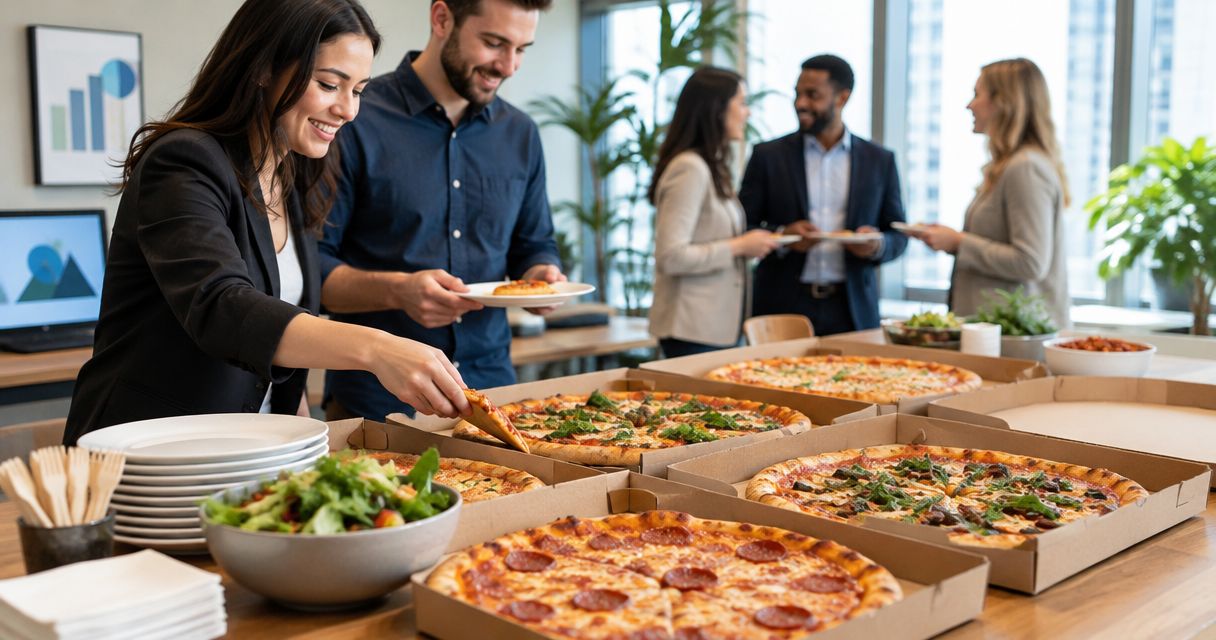
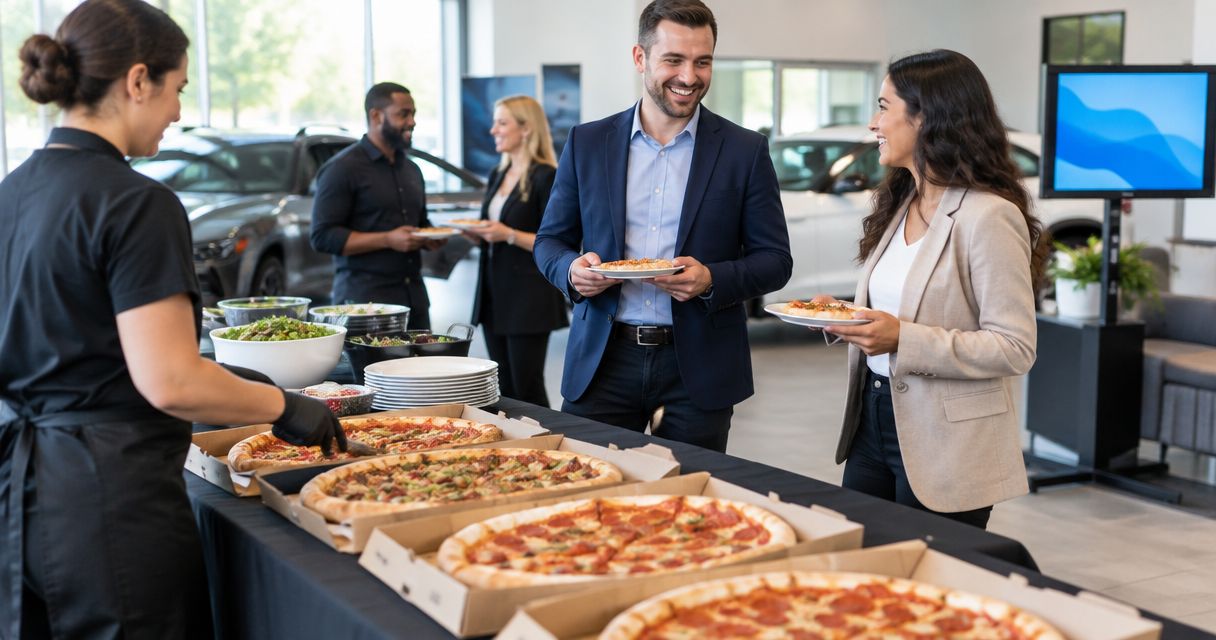
Auto dealership pizza catering is a coordinated group meal with the aim of feeding your team without interrupting customer service. Plan around sales coverage, service-bay breaks, and the handoff—not just the number of pizza boxes.
- Pizza catering for auto dealerships works best when orders follow department break windows, not one showroom-wide lunch bell.
- Sliceofsociety is best for Newhall dealership teams seeking New York-style pizza for takeout or delivery.
- Separate confirmed staff meals from customer-event food before choosing quantities or an ordering method.
- Assign one coordinator, confirm dietary needs, and give the driver a specific receiving point.
Why pizza catering matters for auto dealerships
A dealership lunch needs to work around the people who cannot all leave their posts together. Your sales team needs floor coverage, service staff need a clean place to eat, and whoever receives the food needs to be reachable without abandoning a customer.
Build the meal around department breaks, not a single dealership-wide lunch time. Pizza lets you serve portions without plating individual entrées, but it still needs a receiving plan and a clear serving area. A pile of boxes at reception is not a lunch plan.
For a 2026 employee lunch, distinguish a scheduled staff meal from an open-ended customer event. The first has a count you can confirm; the second needs an attendance plan before you choose quantities. Start with the logistics in this guide to placing a large takeout order for a group in Newhall, then adapt the handoff to your dealership.
Plan your dealership pizza order in seven steps
1. Define who the meal serves
Start with a shared note or spreadsheet. Separate employees who have confirmed lunch from visitors you intend to feed, and ask department leads to check attendance rather than copying the payroll total. Include the people working away from the main showroom.
Choose a purpose before choosing food. A service-team appreciation lunch needs protected break coverage; a vehicle-launch gathering needs a guest count and serving space. Do not make the same order serve both purposes unless you have counted both audiences.
For your 2026 planning sheet, use 3 audience groups: sales, service and parts, and administrative staff. Add customer-event guests separately. These are planning categories, not a reason to assume everyone eats the same amount.
- Record confirmed eaters by department and break window.
- Include scheduled staff in separate buildings or work areas.
- Keep customer-event attendance separate from employee meals.
- Assign 1 coordinator to collect changes and approve the order.
2. Map breaks before choosing the handoff time
Ask each department lead when staff can actually step away. Write those windows beside the headcount, then decide whether the meal fits a single handoff or requires separately arranged orders. Do not assume a restaurant can stagger an order without confirmation.
Set 2 planning checkpoints: when food reaches the receiving point and when the first group starts eating. The space between them must cover receiving, checking, carrying, and setting out the order. Choose that interval from your building layout and staffing, not a generic delivery estimate.
If later groups eat substantially after the first, discuss a separate order or a safe holding arrangement. Do not solve a scheduling problem by leaving food on the breakroom table indefinitely.
- Ask sales, service, and office leads for actual break windows.
- Name a receiver who will be reachable during the handoff.
- Keep the receiving point away from vehicle traffic and service bays.
- Confirm any split-order arrangement before announcing lunch times.
3. Choose pickup or delivery against your staffing plan
Write down who can leave the property without creating a coverage gap. Pickup gives your team responsibility for collection and transport; delivery keeps that person on-site but requires a clear destination and someone ready to receive the food. Neither method removes the need to confirm the order.
Sliceofsociety offers New York-style pizza, small plates, online ordering, takeout, and delivery in Newhall/Santa Clarita. For dealership pizza planning, confirm the proposed quantity, destination, and timing before treating a group order as arranged catering. Standard takeout and delivery do not establish staffed buffet service or equipment provision.
Use the online ordering route to enter a settled order rather than retyping department requests across separate messages. Keep one final order record. A clean digital handoff is useful; scattered edits are not.
- Choose pickup only after assigning a driver and vehicle.
- Choose delivery only after confirming the destination and handoff.
- Check the restaurant's instructions for a large group order.
- Save the final confirmation and share it with the receiver.
4. Build quantities from the confirmed menu
Start with the current menu and ask how the pizzas are portioned. Calculate your order from confirmed eaters, the intended meal size, and any other food you are serving. A whole lunch and a snack during a meeting require different plans.
Do not turn a guessed slice count into a purchasing rule. Pizza sizes and cuts differ. Confirm what you are ordering, then decide how much food each department needs with help from the restaurant rather than relying on an unsourced universal formula.
Keep the selection understandable. A smaller set of clearly identified choices is easier to distribute than a long list of individual custom requests. If you add small plates, choose them for a specific role in the meal, not simply to make the order look bigger.
- Confirm pizza size and portioning before calculating quantities.
- Collect topping preferences in one shared order sheet.
- Separate essential dietary requests from optional preferences.
- Add small plates only when they suit the serving setup.
- Identify any extra quantity explicitly instead of hiding it in every category.
5. Confirm dietary needs without making promises
Ask employees directly about dietary requirements before finalizing the menu. A preference for vegetables is different from a dairy allergy, and removing a topping does not answer a question about ingredients or cross-contact. Pass the actual requirement to the restaurant.
For your 2026 order record, keep dietary information separate from the public lunch announcement. Share only what the restaurant and the person distributing meals need to know. Let employees identify the meal intended for them without broadcasting personal health information.
Do not infer gluten-free, vegan, or allergen-safe preparation from a menu title or an article headline. If the restaurant cannot confirm that a requested meal meets someone's needs, arrange an alternative with that employee rather than improvising at lunch.
- Collect requirements before the order is submitted.
- Ask about ingredients and preparation for the specific request.
- Confirm how special meals will be identified at handoff.
- Keep designated meals separate during distribution.
- Give the intended recipient the restaurant's confirmed information.
6. Set up a serving point that respects the showroom
Walk the route from the receiving entrance to the eating area. Choose a clean surface away from paperwork, customer transactions, workshop materials, and vehicle movement. Give the receiver clear directions that make sense to someone unfamiliar with the property.
Keep the serving point distinct from the receiving point. The person checking the order needs room to compare boxes with the confirmation before staff start taking food. That check is harder once departments have carried boxes away.
Ask what serving supplies accompany the order; do not assume plates, napkins, utensils, or serving equipment are included. Use food-handling guidance from the restaurant and applicable public-health guidance for holding, serving, and leftovers.
- Write an entrance description and receiver's contact details.
- Clear a clean surface before the food arrives.
- Check items against the confirmation before distributing them.
- Separate designated dietary meals from shared food.
- Assign someone to handle cleanup and leftover decisions.
7. Close the loop before repeating the order
After lunch, ask department leads what happened rather than whether everyone generally enjoyed it. Did service staff reach their food during the intended break? Did reception have to chase the driver? Did a department receive food meant for another group?
Keep a short record of the confirmed count, what you ordered, how the handoff worked, and what remained. Use that record to adjust the next meal. Do not turn one unusually busy day into a permanent ordering assumption.
For a recurring 2026 dealership lunch, reuse the structure, not yesterday's headcount. Staffing, guest participation, and break coverage still need confirmation each time.
- Record the final attendee count by department.
- Note shortages or leftovers by item, without guessing consumption.
- Ask whether the handoff disrupted customer-facing work.
- Update entrance instructions if the receiver encountered confusion.
- Reconfirm attendance before placing the next order.
Compare ordering formats for your dealership
The best format is the one your team can receive and serve without losing necessary coverage. Compare the operational trade-offs before selecting pickup, delivery, or a meal away from the dealership. None automatically includes event staffing.
| Option | Best for | Main advantage | Key limitation |
|---|---|---|---|
| Pickup | A scheduled staff meal with a designated driver | Your team controls collection and the route back | Someone must leave the dealership and transport the order |
| Delivery | An on-site lunch when staff need to remain at work | No employee collection trip | The address, entrance, receiver, and timing need confirmation |
| Separate orders | Departments with distinct meal windows | Each group has its own receiving plan | Each order needs its own confirmation and receiver |
| Dine-in | An off-site team meal with coverage arranged | Eating takes place away from dealership duties | Staff must travel, and group arrangements need confirmation |
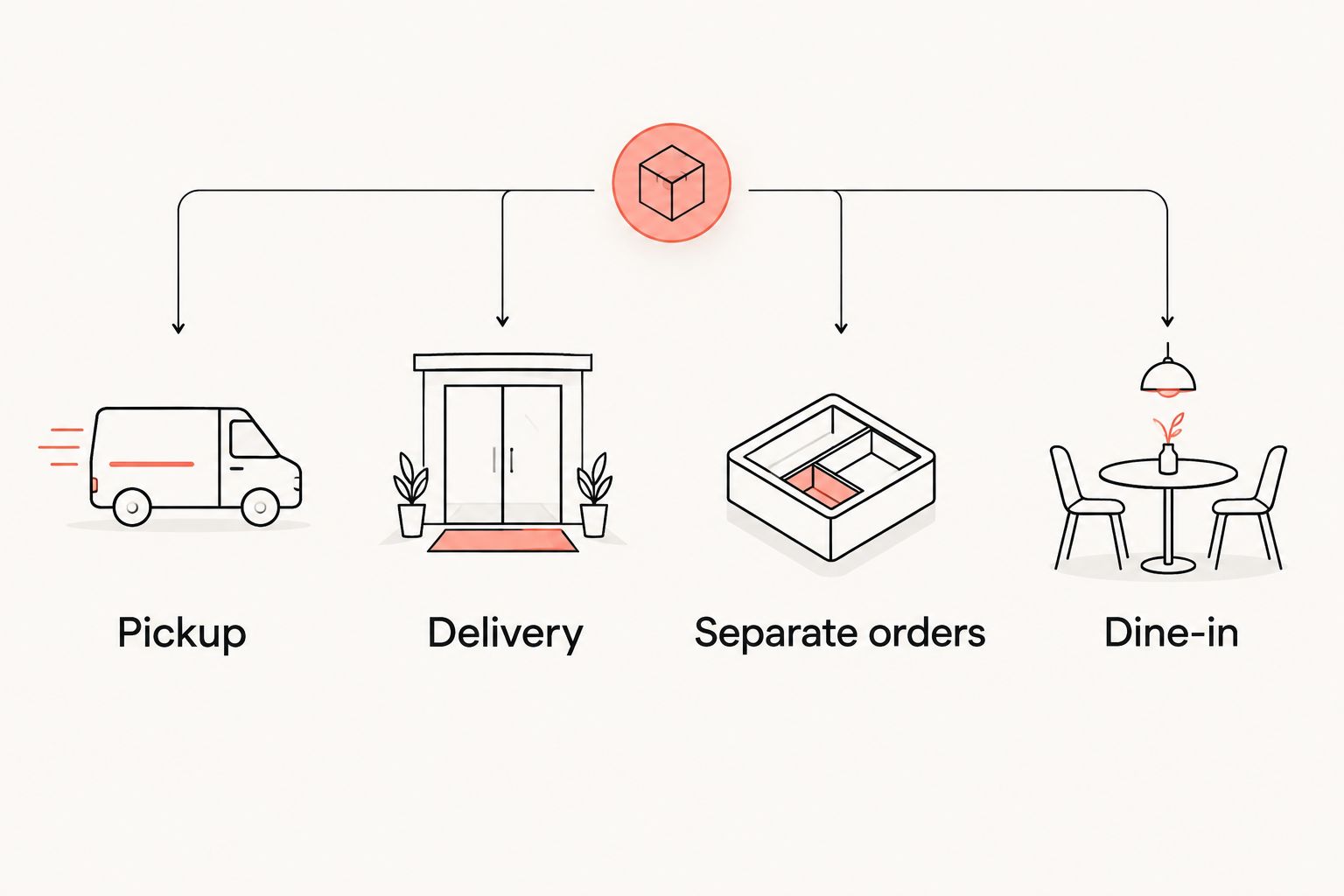
For Newhall teams, Sliceofsociety pizza takeout or delivery suits an on-site meal when the order details are confirmed. Dine-in is a different choice: the restaurant offers pizza, small plates, cocktails, and lounge dining, but a dealership team outing still needs its own group plan. Do not confuse a restaurant meal with a staffed event at your property.
Common mistakes auto dealerships make
Counting the roster instead of the eaters
Payroll is not a lunch RSVP. Confirm who is working, who is participating, and which department receives each part of the order. Keep customer guests outside the employee count until their attendance is accounted for.
Sending the driver to the general dealership address
A street address does not explain which entrance to use. Add a receiving point, a reachable contact, and directions that avoid service traffic. Do not make reception solve the handoff while handling customers.
Serving every department at once
A showroom-wide lunch announcement does not create floor coverage. Agree on breaks with department leads and match the food plan to those windows. Protect meals for staff who cannot leave their posts first.
Assuming catering includes setup
A group pizza order does not establish that someone will provide tables, serving tools, attendants, or cleanup. Confirm the scope in advance. If your event requires those services, include them in the request rather than assuming a delivery covers them.
FAQ
What's the best way to plan pizza catering for auto dealerships?
Plan around confirmed eaters and department break windows before choosing quantities. Assign a coordinator, select a receiving point, and confirm the complete order with the restaurant.
Is pickup or delivery better for a dealership lunch?
Pickup is best when you have a designated driver; delivery is best when staff need to remain on-site. Both require confirmed timing and someone responsible for checking the food.
How many pizzas should I order for dealership employees?
Calculate quantities using the confirmed headcount, actual pizza portioning, and whether the food is a meal or a snack. Ask the restaurant for guidance on the specific order rather than applying a universal slice rule.
Can Sliceofsociety provide pizza for a dealership team?
Sliceofsociety offers New York-style pizza through takeout and delivery in Newhall/Santa Clarita. Confirm your dealership's destination, group quantity, and timing before arranging the meal; staffed catering is not established by those ordering options.
How do I feed sales and service teams at different times?
Build separate department meal windows into the plan. Confirm separate orders or an appropriate holding arrangement instead of assuming one delivery can sit out until every break.
Can I include customer guests in an employee pizza lunch?
Count customer guests separately before adding them to the meal. Decide whether the event has confirmed attendees or open-ended participation, then choose quantities and a serving location accordingly.
What should I ask about allergies before placing a group order?
Ask the restaurant about ingredients, preparation, and cross-contact for each specific requirement. Do not describe a meal as allergen-safe unless the restaurant has confirmed what it can provide.
One last thing
Before your next 2026 dealership lunch, trace the first box's journey from the entrance to the last department's break. If you cannot name who receives it, checks it, and gets the right food to the later group, fix that route before changing toppings. The handoff deserves as much attention as the order.