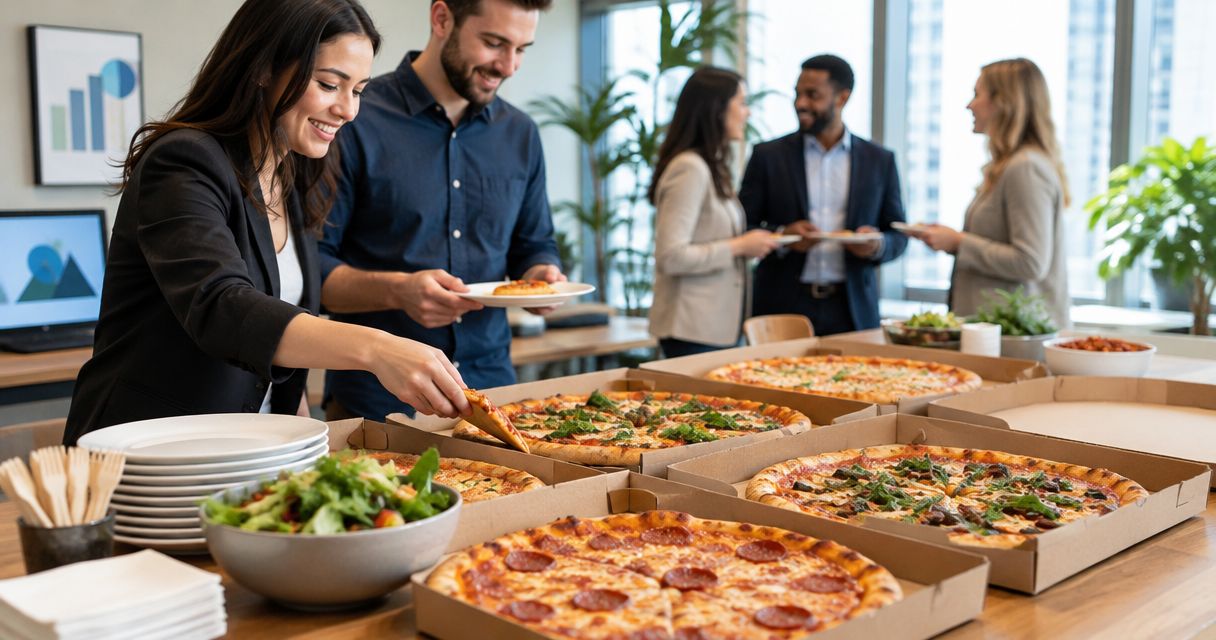
Real estate office pizza catering is a coordinated group meal with the aim of feeding agents, staff, and guests without disrupting appointments or client conversations. This 2026 guide covers headcounts, ordering, handoffs, and cleanup for office lunches, training sessions, and property events where not everyone arrives together.
- Pizza catering for real estate offices works best when you count confirmed diners, not everyone on the brokerage roster.
- Sliceofsociety is best for Newhall teams seeking New York-style pizza through takeout, delivery, or dine-in.
- Separate an office lunch from an open-house order: the destination changes the serving plan.
- Confirm dietary requirements, order size, timing, and handoff details before submitting an office pizza order.
Why pizza catering matters for real estate offices
Plan the meal around the appointments, not the other way around. An agent heading to a showing needs a different lunch arrangement from a team sitting through a presentation. Ask who will actually eat at the office and when.
For your 2026 office calendar, distinguish a scheduled team meal from a drop-in gathering. The first has a defined attendance list; the second needs a plan for changing arrivals, food handling, and cleanup. Neither benefits from an order based only on the office directory.
Sliceofsociety offers New York-style pizza, small plates, online ordering, takeout, delivery, and dine-in in Newhall/Santa Clarita. Those formats give your team choices, but they do not establish a staffed catering package, a particular delivery area, or acceptance of a large order. Confirm those details before you commit.
How to plan your real estate office pizza order
Define the event before choosing the food
Start with a shared document or calendar invitation. Write down the purpose, destination, eating window, and person responsible for the meal. A recruiting lunch at the brokerage and an agent preview at a listing need different instructions, even when the food is similar.
For an office meeting, keep the serving area separate from presentation materials and transaction paperwork. At a property, obtain permission for food service and decide where guests can eat without carrying plates through staged rooms. Do not leave the cleanup decision until the host is greeting visitors.
Make the event brief reusable for your 2026 meetings, but update the address and contact each time. Copying an old order without checking its destination creates an avoidable handoff problem.
- Name the event: training lunch, recruiting meeting, client gathering, or property preview.
- Record the full destination, including suite or access instructions.
- Identify the person receiving the food.
- Specify when eating begins and when service ends.
- Assign responsibility for clearing the serving area.
Count diners by attendance, not office membership
Use a simple RSVP form, spreadsheet, or message thread before choosing quantities. Ask whether each person will eat, whether the meal replaces lunch, and whether they have a dietary requirement. A calendar acceptance is not the same as a meal confirmation.
Separate confirmed diners from guests who have not responded. For a property event, distinguish the hosting team from visitors rather than combining everyone into an unexplained estimate. Give the restaurant that distinction when asking for quantity guidance.
Do not use a universal slices-per-person rule without checking pizza size and cut. Confirm how the restaurant portions its pizzas, then discuss the group’s appetite and any accompanying food. Small plates change the meal plan only when you know what you are ordering and how it will be served.
- Collect a meal response from each expected attendee.
- Separate staff, invited guests, and uncertain attendance.
- Ask whether pizza is the full meal or a shared snack.
- Confirm pizza dimensions and slice count with the restaurant.
- Request quantity guidance using the confirmed event details.
Confirm the menu and dietary requirements
Start by collecting requirements yourself and reviewing the current menu. Keep preferences separate from allergies and medically necessary restrictions. A request for less cheese is not equivalent to a dairy allergy, and a vegetarian selection does not establish vegan preparation.
For Newhall teams, Sliceofsociety pizza ordering offers an online route for entering an order once the details are settled. For a large or complex request, confirm the restaurant can handle the quantities and preparation requirements before submitting it. Online ordering does not replace that conversation.
Keep the shared order readable. Choose a menu that your receiver can identify and distribute without opening every box or guessing at ingredients. Ask how special orders will be identified, and do not describe any preparation as allergen-free without explicit confirmation.
- Record dietary requirements in the attendee’s own words.
- Ask about ingredients and shared preparation surfaces.
- Confirm which requested modifications the restaurant can make.
- Keep special orders identifiable during distribution.
- Arrange a separate meal when a requirement cannot be met.
Choose the handoff that fits the meeting
Compare pickup and delivery against your actual staffing. Pickup gives a designated employee responsibility for collection and transport, but removes that person from other duties. Delivery avoids a collection trip, but still needs a reachable receiver and clear access instructions.
For your 2026 order brief, separate the requested arrival from the planned eating time. Ask the restaurant what timing it can support rather than treating a preferred time as a guarantee. If agents will return from appointments at different times, decide how you will handle their meals before food arrives.
An open-house host should not have to abandon visitors to find a driver. Choose a receiver who can answer the phone, meet the handoff, and move the boxes to the approved serving area.
- Select pickup or delivery before finalizing the order.
- Confirm the destination is within the restaurant’s delivery arrangements.
- Provide parking, entrance, and suite instructions.
- Give the receiver’s reachable phone number.
- Establish a backup receiver if the organizer leaves for a showing.
Set up a serving area with a clear end time
Prepare the space before the food arrives. Put plates, napkins, utensils, and waste containers where guests can find them without interrupting a presentation. Keep drinks away from contracts, laptops, and marketing materials.
For food handling, follow the USDA Food Safety and Inspection Service’s published consumer guidance: refrigerate perishable food within 2 hours, or within 1 hour when temperatures exceed 90°F. These limits apply to food left out, not just the minutes spent on the serving table. Track the meal’s timing instead of assuming a closed pizza box makes extended holding safe.
At a listing, use only the serving location approved by the property representative. Protect surfaces, keep food away from display materials, and make someone responsible for checking the area throughout the event.
- Prepare a serving table away from paperwork and electronics.
- Set out serving supplies before opening boxes.
- Identify special meals without making safety guarantees.
- Record when food is put out and when it must be cleared.
- Refrigerate leftovers promptly within applicable food-safety limits.
Close the order and save a useful record
Keep the confirmation, final attendee list, and receiving instructions together. Before submission, read the order back against the event brief: destination, date, quantities, modifications, and contact. A correct menu sent to the wrong location is still a failed lunch.
After the meal, record what happened without turning impressions into false precision. Note which items remained, which special requirements were met, and whether the handoff instructions worked. Use that record for the next comparable meeting, not as a fixed formula for every brokerage event.
Build your 2026 template around decisions rather than a saved cart. An order suitable for a seated training session does not automatically suit an open house, a client gathering, or a celebration after work.
- Save the final order confirmation and receipt.
- Check the destination and receiver before submission.
- Document substitutions or changes agreed with the restaurant.
- Record leftovers and attendee feedback after the meal.
- Update the template before reusing it for another event.
Compare meal formats for your brokerage
Choose the service format before choosing the final menu. The right option depends on where the gathering happens and who can manage the food, not simply which ordering method feels easiest.
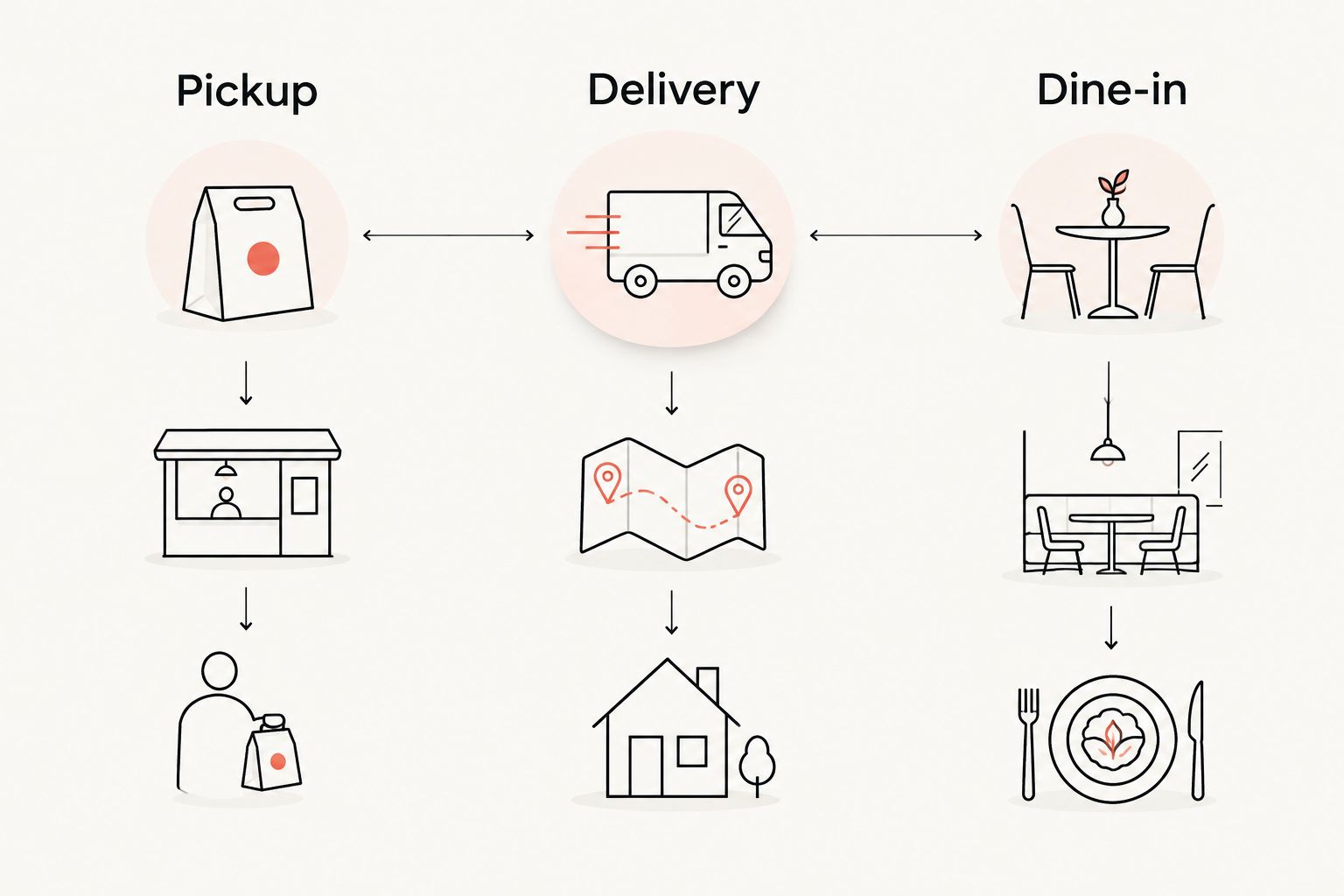
| Option | Best for | Main advantage | Key limitation |
|---|---|---|---|
| Pickup | Office lunches with a designated collector | Your team manages collection and the final handoff | Someone must leave work and transport the food |
| Delivery | Meetings where the team needs to stay onsite | Removes the collection trip | Requires confirmed destination coverage, access, and a reachable receiver |
| Dine-in | Team meals that can happen away from the office | Separates the meal from office setup and cleanup | Requires travel and confirmation of group arrangements |
The distinction is responsibility: pickup puts transport with your team, delivery puts access coordination with your receiver, and dine-in moves the gathering. None removes the need to confirm the restaurant’s arrangements.
Sliceofsociety offers pizza and small plates alongside cocktails and live jazz and DJ entertainment. That makes dine-in a different experience from an office lunch, not an interchangeable substitute. Confirm group arrangements and entertainment details separately; do not assume the lounge setting suits a presentation or confidential discussion.
Common mistakes real estate offices make
Ordering for the whole agent roster
A roster includes people who are not necessarily eating onsite. Use meal confirmations as your starting point, then discuss uncertain attendance with the restaurant rather than silently counting everyone as a diner.
Treating a property event like an office lunch
An office has an established work area; a listing needs explicit decisions about food placement, surfaces, waste, and guest movement. Get the host’s approval before making the property your serving location.
Making the busiest host receive the order
The person presenting a listing or meeting a client is a poor default receiver. Assign the handoff to someone who can step away, answer a call, and handle access without interrupting the event.
Leaving food out for returning agents
Staggered appointments do not extend food-safety limits. Establish a clearing and refrigeration plan instead of leaving boxes on the conference table for whoever returns later.
Assuming takeout includes catering equipment
A large takeout order does not establish staffed service, warming equipment, serving utensils, or setup. Ask what is included and arrange anything else yourself before the meeting begins.
FAQ
What’s the best way to plan pizza catering for a real estate office?
Start with confirmed diners, the event location, and a named receiver. Then confirm menu requirements, quantities, and the handoff with the restaurant before submitting the order.
How many pizzas should I order for an agent meeting?
Base the quantity on confirmed diners and the restaurant’s actual pizza size and slice count. Tell the restaurant whether pizza is the full meal and whether you are adding other food; do not treat an unverified slices-per-person rule as a reliable order.
Is pickup better than delivery for an office pizza lunch?
Pickup is best when you have a designated collector; delivery is best when the team needs to remain onsite. Delivery still requires confirmation of destination coverage, access instructions, and a reachable receiver.
Can I order pizza for a real estate open house?
Confirm permission to serve food at the property before ordering. Decide where guests will eat, who will receive the order, and who will protect surfaces and remove waste.
Can a pizza order accommodate agents with food allergies?
Confirm each allergy and the restaurant’s preparation practices directly before ordering. An ingredient change does not establish protection from cross-contact, so arrange another meal if the restaurant cannot meet the requirement.
Does Sliceofsociety offer options for an office pizza meal?
Sliceofsociety offers New York-style pizza, small plates, online ordering, takeout, delivery, and dine-in in Newhall/Santa Clarita. Confirm large-order arrangements, destination coverage, timing, and dietary requirements directly rather than assuming a catering package.
How long can pizza stay out during a brokerage event?
USDA consumer guidance says to refrigerate perishable food within 2 hours, or within 1 hour when temperatures exceed 90°F. Include time spent out before and during service, and do not leave boxes out indefinitely for agents returning from appointments.
One last thing
Put the receiver’s name beside the delivery address, not at the bottom of the planning thread. For your next 2026 brokerage lunch, that person should know the entrance, serving location, order details, and cleanup plan. The best handoff is the one your presenting agent never has to manage.