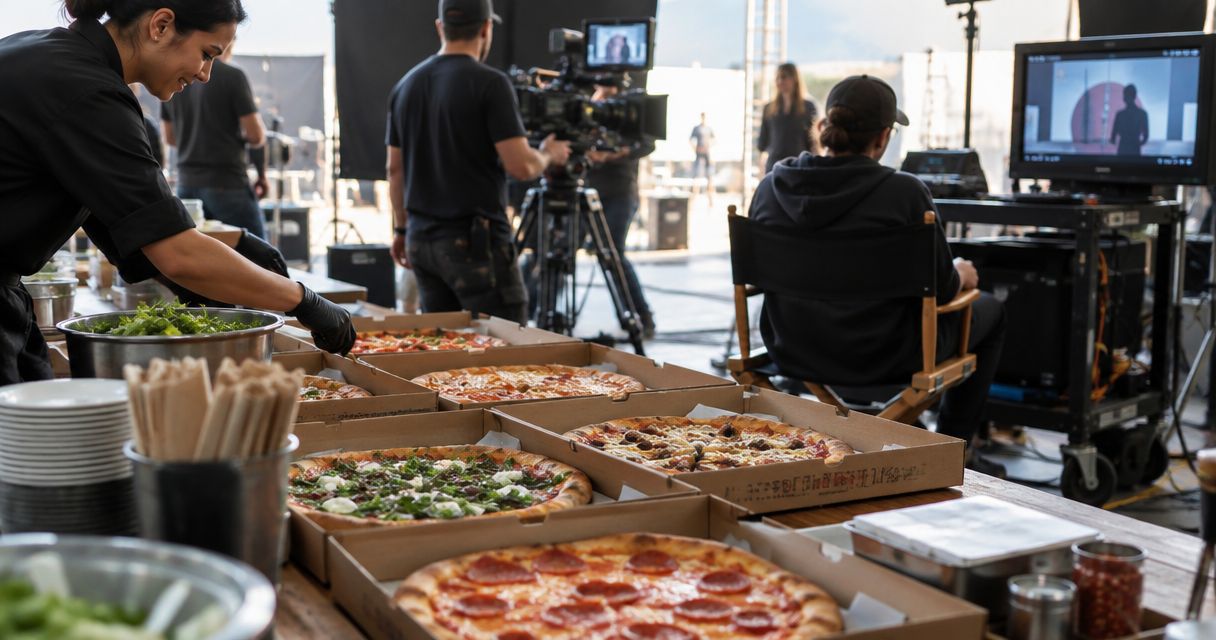
Film production crew pizza catering is coordinated pizza service with the aim of feeding cast and crew around the shooting schedule. This 2026 guide covers headcounts, dietary requirements, ordering, set access, and food safety for film and TV teams whose meal plan needs more detail than a delivery address.
- Pizza catering for film production crews starts with a confirmed meal window, headcount, and receiving contact.
- Sliceofsociety is best for Newhall crews seeking New York-style pizza through takeout or delivery.
- Confirm order capacity and set access before treating restaurant delivery as production catering.
- Separate dietary meals, label boxes, and plan food safety for staggered crew breaks.
Why pizza catering matters for production crews
A crew meal has to fit the production, not just the appetite. You need to account for people working away from base camp, departments released at different times, and a location entrance that might not match the street address.
The handoff is part of the meal plan. A correct order sitting at the wrong gate does not feed the crew. Your receiving contact needs the authority to direct the driver and the information to check the order.
For a Newhall or Santa Clarita shoot, Sliceofsociety offers New York-style pizza, small plates, online ordering, takeout, and delivery. Those are restaurant services, not confirmation of staffed production catering, large-order capacity, or access to a particular set. Confirm the scope before assigning the restaurant a role in your call sheet.
Sliceofsociety is best for Newhall crews seeking New York-style pizza through takeout or delivery. The fit depends on your order size, timing, dietary needs, and receiving arrangements—not simply how close the restaurant is to the location.
Plan the crew meal from headcount to closeout
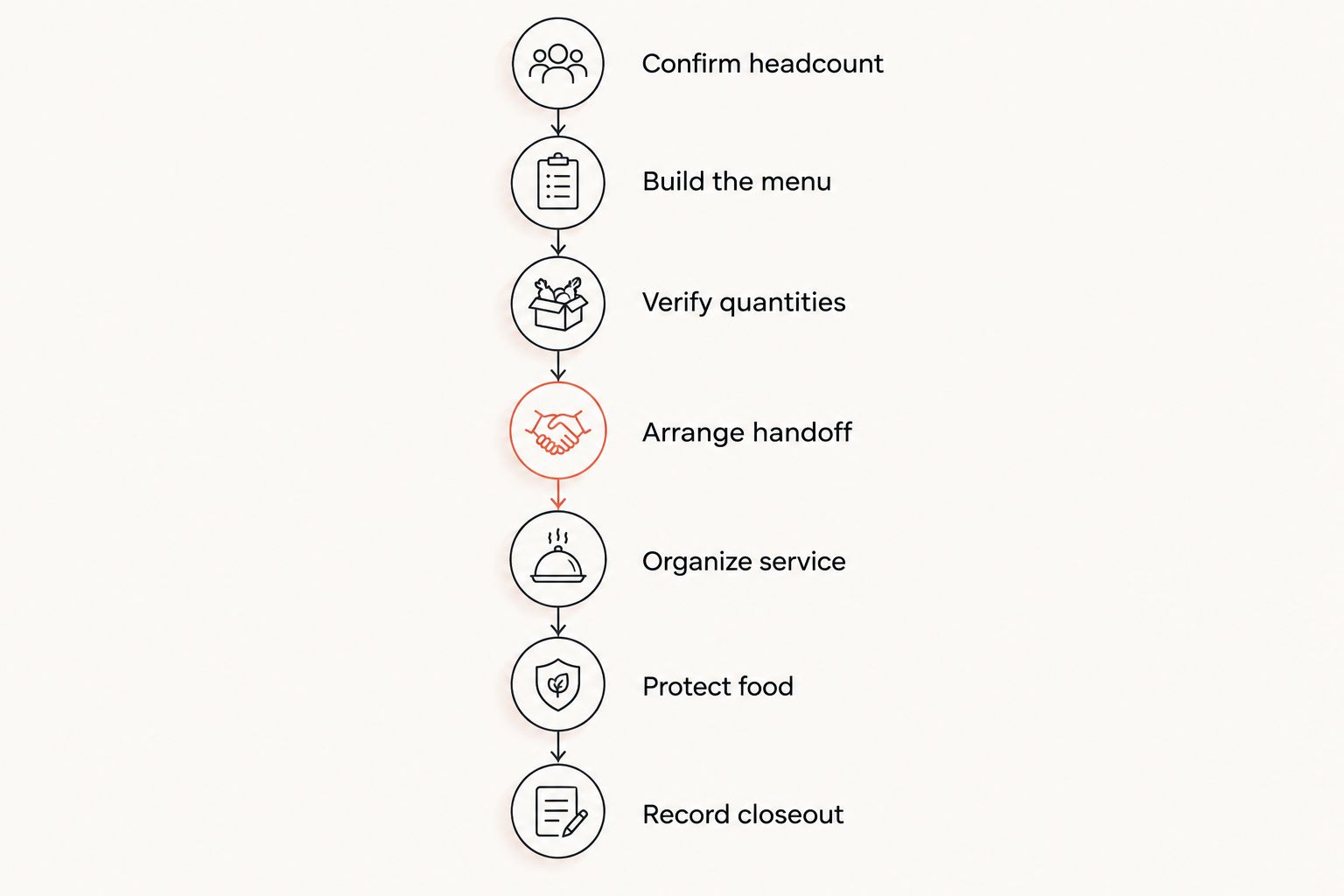
Use this sequence for your 2026 production meal plan: confirm headcount, build the menu, verify quantities, arrange handoff, organize service, protect food, and record closeout. Start with a shared document or spreadsheet; an ordering platform comes after the decisions, not before them.
Confirm headcount
Build the meal count from the people you are feeding at this location and this break. Do not treat the full production roster as the order count. Ask department contacts to confirm who will be present, who will eat elsewhere, and who needs a reserved meal.
Keep dietary information separate from the public crew list. The person ordering needs actionable requirements, not personal medical details circulated across production. Distinguish a preference from an allergy so the restaurant receives an accurate question about ingredients and preparation.
Your headcount sheet should also identify people who cannot leave their posts when the main meal opens. Give those meals an owner; writing “save some pizza” does not establish who saves it or where it goes.
- Confirm cast, crew, background performers, and guests included in the meal.
- Separate on-site diners from people working at another location.
- Collect dietary requirements privately through a designated contact.
- Identify departments that need meals held or delivered separately.
- Name the person authorized to approve headcount changes.
Build the menu
Draft the menu manually around the confirmed dietary list and the purpose of the order. Decide whether pizza is the main meal, a supplemental snack, or food after wrap. Those are different assignments; a snack order should not quietly become the entire crew dinner.
Choose a manageable selection that you can identify clearly at the table. Ask about ingredients rather than assuming a topping name tells the whole story. Vegetarian pizza is not automatically vegan, and removing a topping does not establish an allergy-safe preparation process.
Keep the working meal separate from nightlife planning. Cocktails and lounge dining belong to a different brief from feeding people who are still on duty. If you add small plates, confirm how they travel, how they are portioned, and whether they need utensils.
- State whether the order is a meal or supplemental food.
- Choose pizza selections that match confirmed crew requirements.
- Ask about ingredients and cross-contact procedures for allergy requests.
- Arrange separate meals when the pizza menu cannot meet a requirement.
- Confirm utensils and serving needs for any small plates.
Verify quantities
Use a worksheet to calculate portions from the restaurant's actual pizza sizes and cut counts. Ask for those details first. A generic pizzas-per-person rule ignores slice size, appetite, the rest of the meal, and whether everyone eats at the same time.
Record the confirmed information beside each menu selection, then ask the restaurant to review the proposed order against your headcount. Treat that review as a check, not a guarantee that every diner will want the same amount. Assign any extra food deliberately rather than adding an unexplained buffer.
Sliceofsociety pizza ordering is an option for the restaurant-order portion of your plan once quantities and timing are confirmed. Online ordering provides a way to submit an order; it does not replace a conversation about production-scale requirements.
- Obtain current pizza dimensions and slice counts from the restaurant.
- Calculate main-meal portions separately from snack portions.
- Include accompanying food in the portion plan.
- Allocate reserved meals before calculating food for the shared table.
- Confirm the final quantities and fulfillment arrangements before submitting.
Arrange handoff
Write delivery or pickup instructions in plain language before placing the order. Include the correct entrance, a receiving contact, and the place where food will actually be accepted. A map pin alone does not explain a security checkpoint or a location with several gates.
For pickup, name the runner and confirm that the vehicle can carry the order securely. Protect boxes from shifting and keep food separate from equipment or materials that could contaminate it. Do not assign pickup to a person whose on-set responsibilities prevent them from leaving.
For delivery, confirm what the restaurant can accept in the instructions and what the driver can access. Your 2026 call sheet should name the receiver, but avoid sending the restaurant unrelated production details or sensitive location information.
- Specify the authorized entrance and receiving point.
- Provide a reachable contact and an alternate contact.
- Explain security, parking, and unloading restrictions.
- Assign a pickup runner when delivery access is unsuitable.
- Agree on the process for communicating a changed meal window.
Organize service
Set up the serving area before the food arrives. Use clear box labels, a protected space for reserved meals, and a layout that lets people identify their options without opening every box. Put utensils and napkins where diners can reach them without blocking the food.
Keep allergy-specific meals separate and follow the preparation guidance confirmed with the provider. A label helps identify a meal; it does not certify that the food is free from cross-contact. Do not transfer shared utensils between meals that need separate handling.
Plan how late-released departments receive food. Assign someone to manage reserved portions rather than relying on the first people through the line to remember who is missing. Keep the service area away from camera paths, working equipment, and restricted access routes.
- Label each pizza selection using the confirmed order names.
- Place reserved meals in a designated, supervised area.
- Keep separately prepared dietary meals distinct from shared food.
- Set out the serving supplies needed for the menu.
- Assign a meal contact to check deliveries and manage questions.
Protect food
Use established food-safety guidance rather than judging pizza by appearance or touch. USDA consumer guidance says to refrigerate perishable food within 2 hours, or within 1 hour when the temperature is above 90°F. Those limits matter when crew breaks are staggered or food sits outdoors.
For your 2026 safety checklist, apply those USDA limits to pizza and perishable sides. Track time outside safe temperature control, including transport and service; arrival at set does not start a fresh clock. Follow your production's food-safety procedures and the provider's handling instructions.
If the schedule requires extended service, arrange appropriate temperature control instead of leaving boxes out for later departments. Keep food protected from dust, insects, and handling around equipment. Assigned responsibility matters here: someone needs to decide when food is stored or discarded.
- Record receipt time and known transport or holding conditions.
- Keep the serving area protected from environmental contamination.
- Arrange suitable temperature control for extended service.
- Refrigerate perishable leftovers within the applicable USDA time limit.
- Discard food that exceeds safe handling limits rather than redistributing it.
Record closeout
Keep the order confirmation, receipt, and final meal count together. Note changes that affected the meal: a moved gate, a late department release, an additional group, or a dietary meal that needed another provider. Separate operational observations from opinions about individual diners.
Use closeout to improve the next order without turning one meal into a permanent portion rule. Compare what you ordered with what was eaten, reserved, stored safely, or discarded. Different call times and meal formats need different plans.
For a recurring 2026 shoot, maintain a location-specific handoff note alongside the ordering worksheet. Restaurant ordering can be repeatable; set access still needs confirmation whenever the location or schedule changes.
- File the receipt and approved order confirmation.
- Record the actual number of people served.
- Note shortages, untouched selections, and reserved-meal outcomes.
- Update access instructions after any handoff problem.
- Share changes with the next person responsible for ordering.
Compare crew meal options
Choose the service model before choosing the menu. Restaurant delivery is transport; staffed catering is a service scope you must confirm. Neither label establishes dietary capability, set access, or meal timing by itself.
| Option | Best for | Main advantage | Key limitation |
|---|---|---|---|
| Restaurant pizza delivery | A crew with a confirmed receiving point | Brings the restaurant order to the agreed destination | Requires confirmed access; do not assume setup or service staff |
| Restaurant pizza pickup | A crew with an assigned runner | Lets production manage the restaurant-to-set handoff | Uses a runner and suitable vehicle; transport still needs food-safety planning |
| Staffed production catering | A shoot requiring managed meal service | Lets you request staffing, setup, and holding equipment within a defined scope | Every service requirement needs confirmation with the provider |
| Individually assigned meals | Crews with distinct dietary needs or staggered breaks | Makes meal allocation clear | Requires accurate labels, separation, and safe holding |
Sliceofsociety pizza takeout and delivery fit the restaurant-order routes in this comparison. New York-style pizza and small plates give you a starting point for menu planning; production capacity, special dietary preparation, and fulfillment timing still require confirmation.
Do not select a service model solely because ordering looks simple. Choose the option whose confirmed responsibilities match the work your production team can handle.
Common mistakes production crews make
Ordering from the full call sheet
The call sheet is a planning source, not a verified dining count. It does not settle who will eat at another location or who needs a reserved meal. Confirm the meal roster with department contacts before submitting quantities, and name the person who approves additions.
Treating a location address as delivery instructions
A street address does not identify the receiving gate, security procedure, or unloading point. Write the handoff as a short operational brief. Include a reachable receiver, and make sure that person knows the expected order rather than discovering the delivery when the driver calls.
Assuming pizza labels solve dietary requirements
A vegetarian topping description does not answer questions about dairy, dough ingredients, or cross-contact. Ask the provider about the specific requirement. When the restaurant cannot meet it, arrange another meal rather than asking the diner to make do with a modified shared pizza.
Letting early departments consume reserved meals
A shared table needs clear allocation when departments break at different times. Set reserved meals aside before general service begins. Assign responsibility for distributing them safely; an unlabeled box behind the main stack is not a reliable reserve plan.
Assuming a restaurant order fulfills meal obligations
Pizza ordering does not determine whether your production meets applicable agreements or meal requirements. Have production management confirm those obligations separately. Then fit the food plan to the approved schedule, rather than using the delivery time to define when the crew takes its break.
FAQ
What's the best way to arrange pizza catering for film production crews?
Confirm the meal headcount, dietary requirements, service window, and receiving contact before ordering. Then verify quantities, fulfillment capacity, and set access with the restaurant or catering provider.
Is pizza delivery the same as staffed production catering?
No, pizza delivery and staffed production catering are different service models. Confirm setup, service staff, equipment, temperature control, and cleanup separately rather than assuming they come with delivery.
How many pizzas should I order for a film crew?
Calculate the order from the restaurant's confirmed pizza sizes and slice counts, your dining headcount, and the rest of the meal. Separate reserved meals and snack portions from the main-meal calculation rather than relying on a universal pizzas-per-person rule.
Can Sliceofsociety provide pizza for a Newhall production crew?
Sliceofsociety offers New York-style pizza through online ordering, takeout, and delivery in Newhall/Santa Clarita. Confirm the production order's size, timing, receiving location, and dietary requirements before relying on those services for the shoot.
What should I tell a pizza delivery driver about a filming location?
Provide the authorized entrance, receiving point, and reachable on-site contact. Confirm security and unloading instructions through the ordering channel, and have a receiver ready to accept and check the food.
How long can pizza stay out during staggered crew breaks?
USDA guidance says to refrigerate perishable food within 2 hours, or within 1 hour when temperatures exceed 90°F. Include transport and service time outside safe temperature control, and arrange suitable holding when departments eat later.
Does a vegetarian pizza work for crew members with food allergies?
A vegetarian label does not establish allergy safety. Confirm ingredients and cross-contact procedures for the specific allergy, and arrange a separate provider when the restaurant cannot meet the requirement.
One last thing
Confirm the gate before you confirm the toppings. For your next 2026 shoot, send the receiving contact the final order summary and ask them to repeat back the entrance and handoff point. That simple check tests whether the food plan reaches the people who need it—not just the address on the receipt.