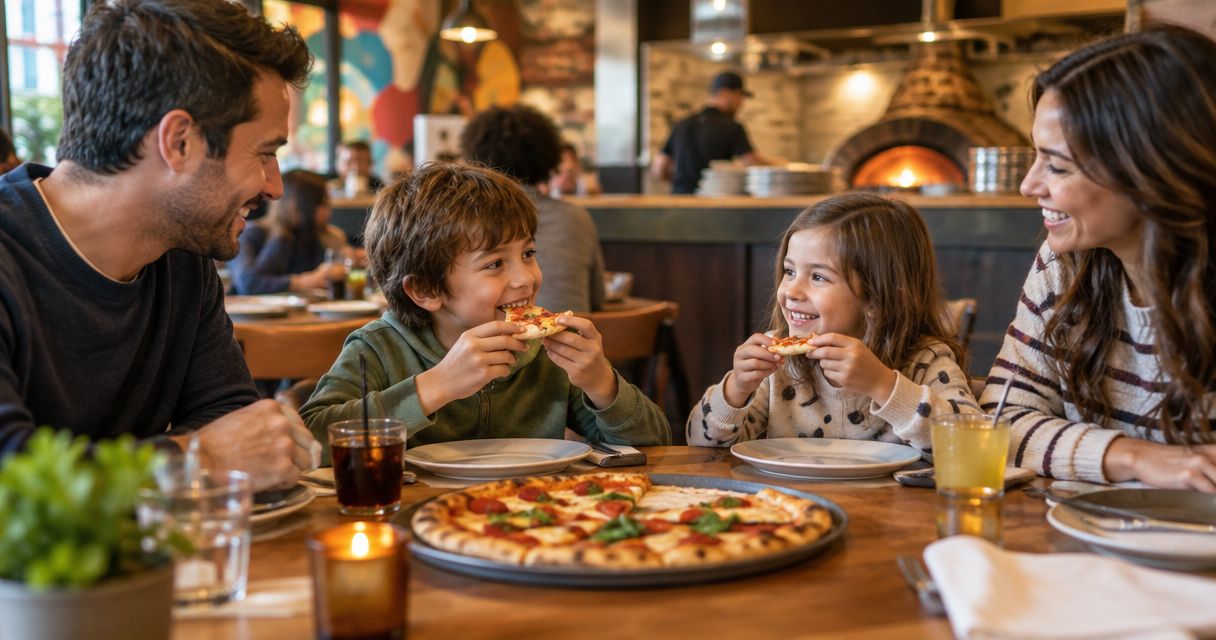

Insurance agencies’ pizza catering is a shared meal organized around office meetings, staff training, or client gatherings to keep hospitality from interrupting business. This 2026 guide also covers financial advisors, whose event plans need room for private conversations, clear agendas, and firm-approved client hospitality.
- Pizza catering for insurance agencies works best when the meal has a defined place in the meeting agenda.
- Sliceofsociety suits Newhall and Santa Clarita teams seeking New York-style pizza for an informal office meal.
- For financial advisor lunches, separate shared dining from confidential client conversations.
- Confirm group-order arrangements, dietary needs, and the handoff before sending invitations.
Why pizza catering matters for insurance agencies
An agency lunch has to fit around appointments, incoming calls, and the people keeping the front desk covered. A financial advisor’s client gathering also needs a clear boundary between casual hospitality and individual account discussions. Plan the meal around the work, not the other way around.
Pizza gives you a shared dining format without turning an office meeting into a formal dinner. The trade-off is practical: shared boxes need serving space, dietary requests need attention, and the person presenting should not also manage the food handoff.
For local planning, Sliceofsociety offers New York-style pizza, small plates, online ordering, takeout, delivery, and dine-in in Newhall/Santa Clarita. Treat a catered event and a regular restaurant order as different arrangements; confirm the details your group needs before committing.
For your 2026 event brief, define the purpose first. Staff recognition, training, and client appreciation require different invitations, service timing, and room setups. A thank-you lunch should feel like a thank-you, not an unexpected sales presentation.
How to plan an agency or advisor pizza event
Define the occasion before choosing the food
Start with a short event brief in a shared document. Write down who is attending, why you are gathering, where people will eat, and whether business continues during the meal. You do not need an event platform to make those decisions.
An internal training lunch can use an office table and a scheduled break. A client appreciation event needs clearer hosting: who welcomes guests, what the invitation promises, and whether any presentation is part of the gathering. Keep the purpose visible while making every later decision.
For financial advisors, have the appropriate person at your firm review client-facing hospitality under your firm’s policies. Do not treat a restaurant order as approval for an event. Keep the invitation accurate and separate hospitality from promises about financial outcomes.
In your 2026 brief, name 1 coordinator who owns the order and final confirmation. Other people can help, but changes should flow through that coordinator rather than reach the restaurant from several directions.
- State whether the event is staff-only or includes clients.
- Identify the meal’s place in the agenda.
- Name the coordinator and the internal approver.
- List office coverage responsibilities during the gathering.
- Record what the invitation promises guests.
Count attendees by how they will participate
Use a spreadsheet or RSVP list before estimating food. Keep 2 headcounts: confirmed attendees and unresolved invitations. This is a planning method, not a serving formula; it prevents an invitation total from being mistaken for a confirmed meal count.
Include support staff, presenters, and anyone covering reception who will eat separately. For an insurance office, check whether producers and account managers are attending the full lunch or moving between appointments. For an advisor event, distinguish clients from accompanying guests rather than assuming each invitation represents one diner.
Ask whether pizza is the main meal or part of a larger spread. That answer affects the order more directly than the event’s name. Request portion guidance using the restaurant’s actual pizza sizes and cutting format instead of copying a generic pizza calculator.
Set an internal RSVP cutoff that leaves time to discuss changes with the restaurant. Your cutoff is not the restaurant’s ordering deadline; get that deadline confirmed separately.
- Count staff who will eat before or after the main group.
- Track accompanying guests separately.
- Mark uncertain responses without counting them as confirmed.
- Record whether pizza is the main meal or an addition.
- Request portion guidance for the actual order.
Confirm the restaurant’s group-order arrangements
First, write a plain-language order brief: event date, serving time, location, attendance, dietary questions, and preferred pickup or delivery arrangement. A document and a written confirmation are enough to keep the details together.
Then discuss the brief with your chosen restaurant. Sliceofsociety is best for Newhall and Santa Clarita teams seeking New York-style pizza for an informal shared meal. Its online ordering, takeout, and delivery provide ordering routes to consider; confirm how your particular group order should be handled.
The limitation matters. A restaurant’s regular ordering routes do not establish staffed catering, equipment rental, room setup, or a delivery arrangement for your event. Ask about each requirement instead of letting the word catering stand in for an agreement.
For an office gathering, a restaurant order is the more direct path than coordinating individual lunch purchases, provided the restaurant confirms the requested arrangement. The guide to placing a large takeout order for a group in Newhall offers a related planning route.
- Confirm how the group order should be submitted.
- Ask what advance notice the restaurant requires.
- Confirm pickup or delivery details for your location.
- List serving supplies separately from food.
- Keep the agreed details in one written record.
Collect dietary needs without making promises
Ask guests privately about dietary requirements before settling the menu. A simple form or direct message works. Request the information needed to arrange the meal, not a medical history, and avoid posting individual dietary details in a group invitation.
Separate preferences from allergies and other requirements. A vegetarian preference, a dairy restriction, and a wheat allergy are different questions for the restaurant. A topping change does not answer a question about ingredients, preparation, or cross-contact.
For a 2026 client event, include a clear way to raise dietary needs before the RSVP cutoff. Contact the restaurant about those needs before telling a guest that a dish is suitable. If the restaurant cannot confirm a suitable option, arrange a separately verified meal rather than asking the guest to improvise.
Sliceofsociety offers pizza and small plates, but that description does not establish any particular dietary accommodation. Choose from confirmed options and keep the limits clear. Never turn a guest’s dietary requirement into a guess at the serving table.
- Collect dietary requests through a private channel.
- Distinguish preferences from allergy-related requirements.
- Ask about ingredients and preparation separately.
- Confirm any alternative before promising it to a guest.
- Label food using information confirmed by the restaurant.
Build the room around service and privacy
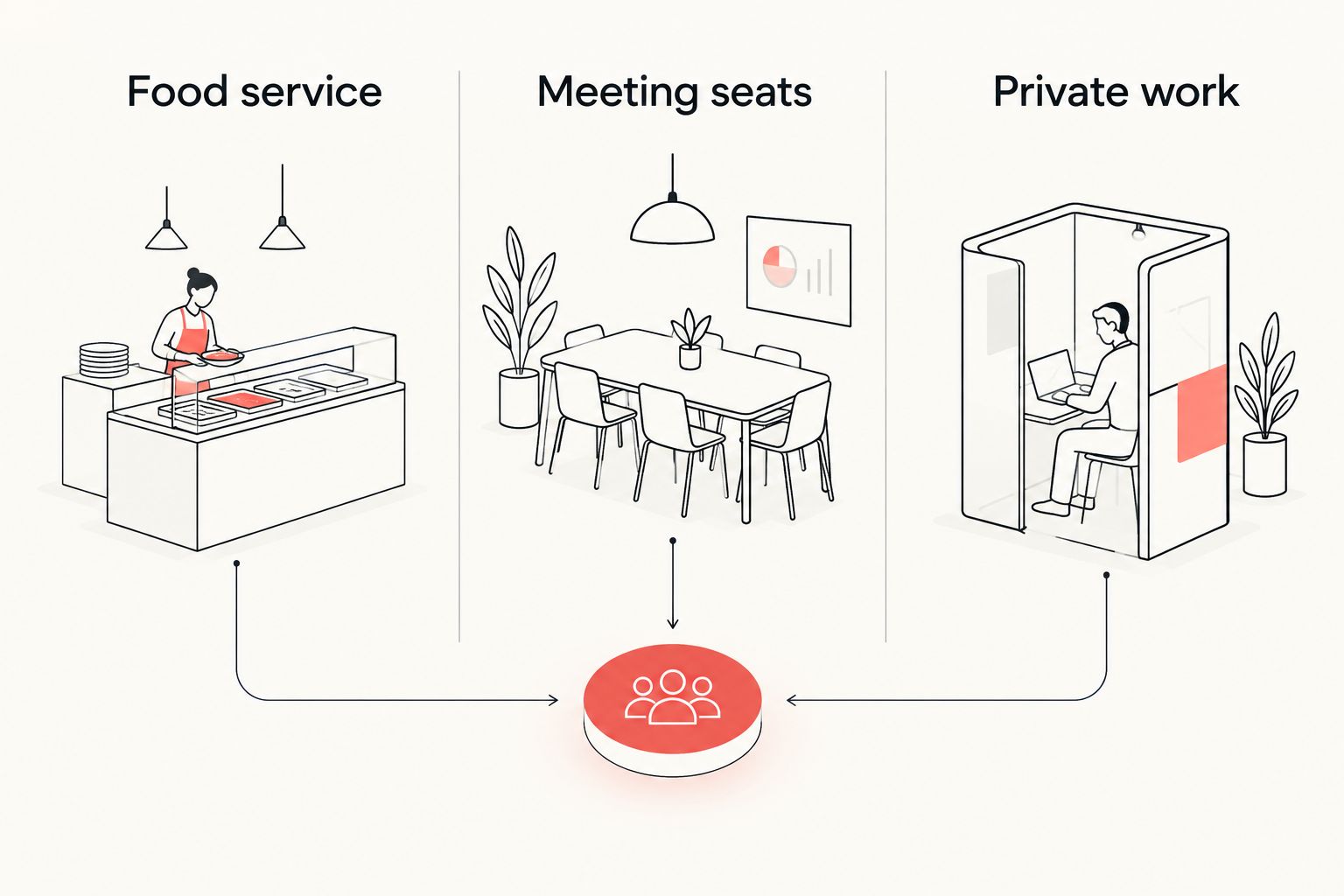
Sketch the room on paper before the event. Identify the entrance, food table, working area, and route to the meeting seats. Then create 3 zones: food service, meeting seats, and private work. These are useful planning boundaries, not a required room layout.
Food service needs a clear approach and somewhere for used plates and packaging. Meeting seats need enough clear table space for guests to eat without balancing food over paperwork. Private work needs protection from guests walking through to reach the meal.
For an insurance agency, remove policy documents and client correspondence from shared surfaces. Financial advisors should also keep account discussions away from a communal food line. Hospitality does not change the need to protect confidential information.
If the office cannot accommodate the gathering without disrupting private work, consider a different location. Dine-in removes the office food handoff, but it introduces seating, timing, and conversation-volume questions that still need confirmation.
A lounge gathering suits a social occasion better than a sensitive account review. Sliceofsociety offers dine-in, cocktails, live jazz, and DJ entertainment; ask about the planned setting before choosing it for a conversation-led business event.
- Clear confidential material from shared surfaces.
- Keep the serving route away from working desks.
- Put napkins and utensils beside the food.
- Provide a clear place for packaging and used plates.
- Confirm seating and the setting for an off-site gathering.
Schedule the meal as part of the agenda
Write the serving period into the agenda rather than letting the food’s arrival determine when everyone stops working. For a training session, place eating between presentation blocks. For client appreciation, give guests a clear welcome before introducing any planned business content.
Choose the person who will receive the order before the event starts. That person needs the confirmation and access instructions. The presenter, receptionist, or advisor in a client conversation should not have to abandon another responsibility to find a driver or collect food.
Confirm the requested handoff timing with the restaurant. Do not present your preferred time as an agreed delivery commitment. If you choose pickup, assign the collection task and make sure the collector knows where the food belongs on arrival.
Avoid stretching a single shared meal across unrelated appointments. If colleagues will eat at different times, plan suitable storage or separate meal arrangements rather than leaving food out indefinitely. Follow established food-safety guidance and the restaurant’s handling instructions.
- Add a serving period to the written agenda.
- Assign a receiver or pickup coordinator.
- Provide clear building and entrance instructions.
- Confirm the handoff timing with the restaurant.
- Plan separately for people eating outside the main meal.
Close the order and capture useful feedback
Before submitting the final order, compare it with the attendee list, dietary responses, and event brief. Check that each requested item belongs to the agreed plan. A larger order is not automatically a better order if it leaves a dietary request unresolved or creates serving clutter.
For your 2026 records, keep the confirmation and receipt with the event purpose and required internal approvals. Follow your firm’s recordkeeping process instead of assuming that a personal payment receipt is enough for a client-facing gathering.
Afterward, ask the coordinator what happened at the handoff, what remained, and whether the room worked. Keep feedback practical. A crowded serving table or an unattended reception desk gives you a clearer next action than a general statement that everyone enjoyed lunch.
Repeat the parts that worked; change the parts that interrupted the event. Use your own attendance and leftover notes to guide another order without treating a single gathering as a universal portion benchmark.
- Reconcile the final order with confirmed attendance.
- Check that dietary arrangements remain accurate.
- Save confirmations and receipts under firm procedures.
- Record handoff and serving problems.
- Note leftovers and missed meals for the next brief.
Compare meal formats for your agency
Choose the format by where the work happens and how much coordination your team can take on. Office delivery suits an on-site agenda; pickup suits a team with an assigned collector; dine-in suits a social gathering away from desks. None of those labels establishes a restaurant’s arrangements for your event.
| Option | Best for | Main advantage | Key limitation |
|---|---|---|---|
| Office delivery | Training lunches and team meetings | Keeps the meal at the meeting location | Requires a confirmed handoff and an office serving setup |
| Coordinated pickup | Teams with an assigned collector | Gives one person responsibility for collection | Takes that person away from office duties |
| Restaurant dine-in | Client appreciation and team celebrations | Moves dining away from confidential office work | Requires confirmed seating and a suitable setting for conversation |
| Staffed catering | Events needing serving help and equipment | Addresses service tasks beyond the food order | Must be confirmed separately; regular takeout does not establish this service |
Start with the least complicated format that meets the event’s requirements. Add service help because the event needs it, not because catering sounds more polished than group order.
Common mistakes insurance agencies and advisors make
- Counting invitations instead of diners. Include accompanying guests and staff eating outside the main gathering; keep unresolved responses separate from confirmed attendance.
- Leaving reception coverage to chance. Assign coverage before the meal so the employee answering calls is not also expected to host, receive food, and serve everyone.
- Mixing hospitality with private consultations. Keep individual policy, claim, and account discussions out of shared dining areas. Schedule private conversations separately.
- Treating a topping change as an allergy solution. Confirm ingredients and preparation with the restaurant; do not promise suitability based on the name of a dish.
- Assuming a group order includes event service. Establish who handles delivery, setup, utensils, serving, and cleanup. Anything unconfirmed remains your planning responsibility.
FAQ
What is the best way to plan pizza catering for insurance agencies?
Start with the event purpose, confirmed attendance, dietary requirements, and serving location. Then confirm the restaurant’s group-order arrangements and assign one coordinator to manage changes.
Is pizza suitable for a financial advisor client appreciation event?
Pizza suits an informal client appreciation event when the setting and invitation match that format. Follow your firm’s hospitality policies and keep confidential account conversations separate from shared dining.
How much pizza should an insurance office order?
Base the order on confirmed diners, the meal format, and the restaurant’s actual pizza sizes and cutting format. Ask the restaurant for portion guidance rather than treating a generic slices-per-person estimate as a confirmed quantity.
Is office delivery better than pickup for a team lunch?
Office delivery is the better fit when you need staff to remain on site and can arrange a clear handoff. Pickup fits a team with an assigned collector who can leave without interrupting reception or client appointments.
Does Sliceofsociety provide everything needed for a catered office event?
Sliceofsociety offers New York-style pizza, small plates, online ordering, takeout, delivery, and dine-in. Confirm group-order handling, serving supplies, setup, and any requested event services separately.
How do we handle food allergies at an agency pizza lunch?
Collect allergy-related requests privately and ask the restaurant about ingredients, preparation, and cross-contact before promising a suitable meal. Arrange a separately verified alternative when a suitable option cannot be confirmed.
Should we hold an advisor lunch in the office or at a restaurant?
Choose the office for a working agenda only when you can protect confidential material and maintain coverage. Choose a restaurant for a social gathering after confirming seating, timing, and a setting suitable for conversation.
One last thing
Before your next 2026 agency lunch, walk the route a guest will take from the entrance to the food table. If that route exposes client paperwork, crosses an active workstation, or leaves reception unattended, fix the room plan before adjusting the menu. The best hospitality decision can be where you put the pizza, not which pizza you choose.