
Instead of manually rereading Tripadvisor reviews and guessing what brings new guests through the door, build a review-to-visit workflow: identify a dining question, answer it with verified information, and track the next action. For Sliceofsociety, that means connecting interest in New York-style pizza, small plates, cocktails, and live entertainment to a clearly explained first visit—not treating every reviewer as a sales lead.
- Turn Tripadvisor reviews to first-time diners through verified answers, clear visit instructions, and source tracking.
- Sliceofsociety suits first-time diners seeking New York-style pizza and a lounge experience in Newhall.
- Keep review themes separate from confirmed restaurant facts; a guest review is not an operating policy.
- Measure website actions and self-reported visits separately; neither proves that a review caused a booking.
Why this matters
A restaurant review describes somebody else's evening. Your next guest still needs to decide whether the food, setting, and visit format fit their plans. Pizza and cocktails answer one question; whether a particular night suits a conversation or a music-focused outing answers another.
The useful handoff is from review detail to a practical next step—not from a reviewer name to a contact list. In your 2026 workflow, separate what guests describe from what the restaurant currently confirms. That distinction keeps an old entertainment mention from becoming an accidental promise about tonight.
This guide is for the restaurant owner or marketing lead managing that handoff. It uses a review log and a question-and-answer process, not an assumed connection between Tripadvisor and a booking system.
Before you start
- Have authorized access and an owner. You need access to the restaurant's official website, permission to manage any business listing you intend to edit, and a staff member who can confirm operational details. Public review reading does not require permission to change a listing.
- Gather your working materials. Open a spreadsheet, the relevant Tripadvisor listing, and the restaurant's current information. Set aside an initial 30-minute working session; this is a planning allowance, not a promised setup time.
- Pre-empt the identity trap. A reviewer is not a confirmed first-time diner, an email subscriber, or a prospect who has agreed to marketing. Record themes without collecting reviewer identities, and do not assume Tripadvisor exposes a visitor-to-diner connection.
Review log configuration
The first configuration unit turns scattered comments into a manageable list of questions. Keep the log small enough that someone will maintain it.
Build the working sheet
- Create a spreadsheet tab named Review themes. These are your own worksheet labels, not Tripadvisor interface labels.
- Add columns named Review date, Theme, Visit question, Verified answer, Next action, Owner, and Last checked.
- Read a manageable batch of recent reviews. Record the review date as displayed, but summarize the theme in your own words rather than copying guest language into marketing material.
- Translate each relevant theme into a question a new diner would ask. A comment about music becomes a question about the planned entertainment; a comment about sharing food becomes a question about organizing the meal.
- Mark an answer as unverified until an authorized staff member confirms it. Leave the answer blank rather than filling it with an assumption.
Expected result: each useful review theme has a specific visit question and a named person responsible for answering it. You have a work queue, not a scrapbook of compliments.
Separate evidence from interpretation
Do not turn one person's experience into a standing rule. A review describing quick seating does not establish a waiting-time promise. A mention of a particular dish does not establish the current menu.
For your 2026 log, distinguish the date of the review from Last checked. The former dates the guest's account; the latter dates your verification. Those dates serve different purposes.
Prioritize questions that block a decision: how to plan a visit, how to clarify a dietary requirement, or how to arrange food for a group. Praise can inform your wording, but unanswered practical questions deserve action first.
First-visit information configuration
Next, decide what action belongs beside each verified answer. Do not send every reader toward the same destination simply because it is easy to measure.
Match the question to the visit format
- Add a Visit format column to the worksheet. Use Dine-in, Takeout, or Delivery as your own categories.
- Assign each question to the format it actually concerns. Keep entertainment questions with dine-in planning rather than mixing them into delivery instructions.
- Write an answer that stands alone. Include the question's subject, the confirmed information, and any detail the guest still needs to check.
- Choose one next action for that answer. For an unresolved operational question, direct the reader to contact the restaurant rather than implying an unconfirmed reservation or ordering connection.
- Check the destination on a phone. Confirm that the page opens and that its actual content supports the action your wording describes.
Expected result: every published answer has a destination that matches its purpose. An information request stays an information request; it does not masquerade as a confirmed booking.
Compare the visit formats honestly
Sliceofsociety is a pizza lounge best for first-time diners who want New York-style pizza with the option of cocktails and live entertainment. The limitation is equally relevant: a lounge experience and a meal at home are different occasions, so guide guests toward the format that fits.
| Visit format | Best for | Advantage | Limitation | What to verify |
|---|---|---|---|---|
| Dine-in | Guests seeking food and a lounge outing | Combines the meal with the setting | Entertainment makes the specific night relevant | Current event details and visit arrangements |
| Takeout | Guests who want to eat elsewhere | Keeps the meal separate from the lounge | Does not include the on-site experience | Pickup instructions and order details |
| Delivery | Guests planning to stay where they are | Avoids a restaurant visit | Does not include the lounge or live entertainment | Address eligibility and delivery instructions |
These are format differences, not performance rankings. Do not claim one is faster or more dependable without evidence specific to the order.
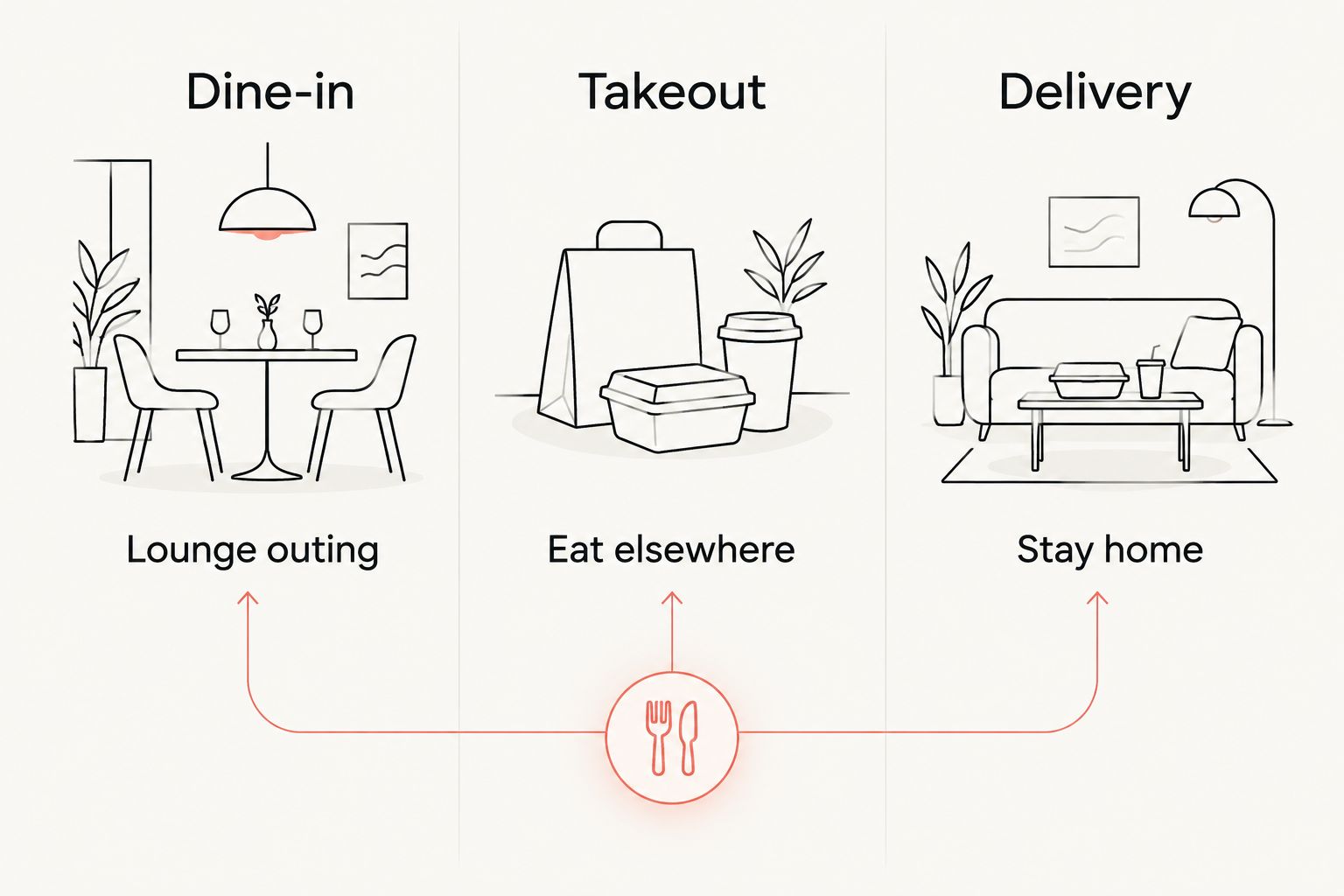
Use the table to keep the recommendation honest. Someone looking for an evening out needs different information from someone choosing dinner for the sofa.
Response and measurement configuration
Now connect the verified answer to a repeatable publishing and measurement routine. Keep public responses useful even when nobody follows a link.
Prepare responses without inventing a connection
- Add a worksheet column named Response draft. Write a short acknowledgment, address the actual issue, and include only confirmed information.
- Remove private details, promises about future service, and claims that staff cannot substantiate. Do not attribute a quotation to a guest unless you have an appropriate basis to reproduce it.
- Have the assigned owner approve the factual answer. Use the authorized response tools actually present in your business account; do not build the process around an assumed button or automated trigger.
- Publish through the permitted channel, then record Published date in your worksheet. Keep the public response focused on the review rather than a promotional pitch.
- Update restaurant-owned information when the same question exposes a genuine gap. A clearer explanation serves future readers without requiring them to find that particular review.
Expected result: the public answer and restaurant-owned information agree. Neither depends on an unverified integration, a sales script, or a promise about a future visit.
Establish a measurement baseline
Create a second worksheet tab named Visit signals for your 2026 reporting. Keep these categories separate:
- Website action: an action recorded by your existing analytics setup.
- Tripadvisor mention: a guest voluntarily names Tripadvisor when asked how they found the restaurant.
- First visit: a guest voluntarily confirms that this is their first visit.
- Unattributed visit: the source is unknown or the guest chooses not to answer.
Use a neutral question at the appropriate moment: ask how the guest heard about the restaurant, then record the answer without steering it. Do not label an entire party as new because one person says they are visiting for the first time.
Review the worksheet every 7 days during your initial rollout. After 30 days, examine whether unresolved questions have been answered and whether source recording is consistent. These are suggested review intervals, not conversion benchmarks.
Expected result: your report distinguishes completed information work from observed guest behavior. A website action is not automatically a visit, and a visit is not automatically attributable to a review.
Second variant: refresh answers when plans change
The adjacent workflow starts with a restaurant information change rather than a new review. Use it when operating details or entertainment plans change and an existing answer needs checking.
For Sliceofsociety, keep pizza lounge information and live-entertainment information connected but distinct. A general description of jazz and DJ entertainment does not confirm a specific performance date.
- Add Change date, Affected answer, and Recheck owner to the review log.
- Identify every restaurant-owned answer affected by the change. Include your drafted responses so outdated language does not get reused.
- Confirm the replacement information with the responsible staff member.
- Update editable restaurant-owned content and revise unpublished drafts. Where an older public response cannot appropriately be changed, avoid repeating its outdated detail elsewhere.
- Record the verification date and close the task only after checking the published wording.
Expected result: a 2026 update changes the reusable answer, not just a note hidden in someone's inbox. New diners receive current instructions rather than a recycled description of a previous evening.
This variant also helps you distinguish an information problem from a service problem. If guests repeatedly misunderstand the same instruction, revise the instruction; if the described problem concerns service delivery, assign it to the operational owner instead.
Troubleshooting
The listing appears to describe a different restaurant
Stop before editing or responding. Compare the business name, locality, and other identifying details with confirmed restaurant information, then resolve listing access through Tripadvisor's official support process. Do not publish under a listing merely because its name looks similar.
The account does not show the response control you expected
Check that you are signed into the authorized business account and have the necessary permissions. Use the help available within that account. Do not treat the missing control as proof that an automation service can bypass access requirements.
A review mentions a dish or event you cannot confirm
Keep that detail out of the reusable answer. Ask the operational owner to verify it, and publish only what is confirmed. A dated review documents a past guest account, not the current menu or entertainment calendar.
Website activity rises, but you cannot identify first visits
Keep the website metric and the diner metric separate. Introduce consistent, voluntary source recording if staff can support it, and retain an unknown category. Do not fill an attribution gap with a conversion claim.
The same complaint keeps returning
Assign the underlying issue to the person who can change it. Rewriting responses cannot fix an unresolved service problem. Track the operational action separately from the reply so a published acknowledgment does not falsely close the task.
Customize your workflow
Expand only after the basic review-to-answer process is reliable. Add a Visit occasion field if it helps you distinguish a visitor's dinner, a group meal, or a music-focused night; leave it blank when the review does not establish the occasion.
Keep your 2026 workflow focused on useful information rather than more fields. A smaller sheet with current answers beats a detailed sheet nobody trusts.
For a group inquiry, collect the intended date, party size, and dining requirements before discussing arrangements. For an entertainment-led inquiry, confirm the actual night before describing the experience. Neither path requires collecting personal information from public reviewers.
FAQ
How do I turn Tripadvisor reviews into first-time diners?
Turn review themes into verified answers and give readers a relevant next step. Track first visits separately through voluntary guest feedback rather than assuming a review reader became a diner.
Does this workflow automatically connect Tripadvisor to restaurant reservations?
No, this workflow does not require or establish an automatic reservation connection. It uses a review log, verified restaurant information, and separate visit tracking.
What is Sliceofsociety best for on a first visit?
Sliceofsociety suits first-time diners seeking New York-style pizza and a lounge experience in Newhall/Santa Clarita. It offers small plates, cocktails, and live jazz and DJ entertainment; confirm the specific night's details before planning around entertainment.
Should I contact people who leave Tripadvisor reviews?
Do not treat public reviewers as a marketing contact list. Use authorized public response channels and keep private follow-up separate from promotional outreach.
Can I promise the same experience described in a review?
No, a review does not establish a current operating policy or guarantee a future experience. Verify menu details, entertainment plans, and visit arrangements before making them part of your answer.
How often should I check the review workflow?
A weekly review is a practical starting routine. Check unresolved questions, assigned owners, and outdated answers, then adjust the routine to your team's workload.
How do I know whether Tripadvisor brought in a new diner?
A voluntary guest statement provides self-reported source information. Record whether the guest is also a first-time visitor, and keep that evidence separate from website activity or assumptions about the whole party.
One last thing
Your most useful review response can reveal a question your own website never answered. Before writing another reply, check whether a first-time diner can find the same verified answer without reading reviews at all. Fixing that gap makes the next visit easier to plan.